London Ontario Real Estate. No Fluff. No Sales Pitch. Just the Truth.

 Written by Ty Lacroix — Real Estate Strategist & Broker, London Ontario 

RSS

Do You Think There May Be a Problem Selling Your Home?

Most homes that struggle to sell in London, Ontario have one or more of the same identifiable problems: condition, pricing, marketing, communication, or curb appeal. None of these are mysteries, and none of them are unsolvable — but they require an honest assessment before the sign goes up, not after the listing has been sitting for 60 days. Every home will sell. The question is at what price, in what timeframe, and whether the result reflects what it was actually worth. Ty Lacroix, Broker at The Envelope Real Estate Group, has spent 24 years telling sellers the truth about what's standing between their home and a sale — before it costs them.

Many homeowners in London, Ontario worry they may have difficulty selling their home. Usually, they're right to wonder — and almost always, there's a specific, identifiable reason. Here are the most common ones, and what to do about each.

Older Home Without the Features Today's Buyers Expect

Older character homes have real appeal — roughly 20% of buyers actively seek them out for location, lot size, or architectural character. But many older homes also carry features the other 80% of buyers will quietly pass on: small bedrooms, no walk-in closet, no primary ensuite, a single-car garage. These issues can eliminate a listing from a buyer's consideration before they ever book a showing.

It's worth noting the flip side: sometimes a well-built character home with genuine features is easier to sell than a newer home built with contractor-grade materials that shows its shortcuts under close inspection.

The solution: identify which features of your home don't meet today's buyer expectations. Sometimes a targeted renovation makes sense. Sometimes the right approach is precise marketing to the specific buyer who values what your home actually offers. And sometimes the answer is to adjust the price to honestly reflect the gap rather than pretend it doesn't exist.

Visible Maintenance Issues

Many buyers walk away from homes that appear to need work — even when the work is minor. Flaking paint, a tired lawn, worn carpets, broken fixtures: individually small, collectively they send a signal that the home hasn't been cared for. Larger issues — awkward layout, outdated plumbing or electrical, deferred maintenance — can make selling genuinely difficult regardless of price.

The solution: don't bury your head in the sand. Walk through comparable homes listed in your price range and look at what you're competing with. Or work with a broker who will tell you the truth about what a buyer will see — not what you want to hear.

Price

Overpricing a property deters qualified buyers and leaves the listing sitting on the market, at which point every subsequent showing comes with the question already in the buyer's mind: "What's wrong with it?" For condos specifically, high monthly fees or pending special assessments compound the pricing challenge by directly affecting what a buyer can afford to carry each month.

The solution: price correctly the first time. For condos, consider whether offering a concession toward condo fees makes the monthly cost of ownership more competitive. A strategically priced home from day one almost always nets more than one that starts high, sits, and reduces.

All Homes Will Sell — On These Conditions

Every home will sell. It comes down to price, condition, the buyer's financial position, their comfort with the location, and occasionally third-party noise — fear-mongering from people who've read one too many doom-and-gloom headlines.

I tell every client the same thing: I have no control over the market. But I have complete control over understanding it, positioning your home correctly within it, and taking consistent, appropriate action until the result is achieved.

Poor Communication

Lack of communication is one of the most common — and most preventable — reasons a listing stalls. You and your realtor should not be operating like you're in the witness protection program.

Realtors hiding under a desk and won't answer the phone

The solution: weekly feedback between you and your broker, minimum. If the same issue keeps surfacing — whether it's a pricing objection, a condition concern, or something specific that buyers mention after every showing — address it. Letting the same problem repeat itself week after week without adjusting is how listings go from stale to expired.

Poor Marketing

If your home isn't getting showings, marketing is the problem. But here's the important qualifier: if the home is overpriced, in poor condition, or poorly located, no marketing can fix that. The outcome will be diddly-squat regardless of how good the photos are.

That said, when the other factors are right, marketing matters enormously. Cell phone pictures won't compete. Professional photography, video, and floor plans outshine the competition nine times out of ten — and reaching the right buyer means knowing who they are, where they search, and how they make decisions, not just blasting a listing at everyone.

The solution: accurate information, no embellishment, and marketing built around the specific buyer your home is actually right for.

Curb Appeal

You have ten seconds — sometimes less — to make a first impression. I've shown hundreds of homes where a buyer lost interest within the first minute of arriving at the property. Whatever happens inside is irrelevant if the outside doesn't invite them in.

For practical guidance on which improvements actually pay off before selling — and which ones quietly cost you money — I have a report that covers exactly that.

The Three Ps That Replace "Location, Location, Location"

That old real estate tagline has had its day. The three things that actually determine whether your home sells — and for how much — are Price, Product, and Promotion. You control the first two. A good broker delivers the third.

If you're thinking about selling in London and want an honest assessment of where your home stands on all three before you commit to anything, that's the conversation worth having first.


Want the honest read on what might be standing between your home and a sale? Reach out for a private conversation — no pressure, no pitch.

For the complete selling framework: Selling Your Home in London, Ontario →

Read

How To Be a Savvy Home Buyer in London Ontario

A savvy home buyer isn't the one who moves fastest or knows the most opinions — it's the one who knows what they don't know, gets the right advice before they start looking, and treats buying a home as a process rather than an event. In London, Ontario's current market, the buyers who consistently come out ahead are the ones who did the boring preparation work first: met with their lender, their lawyer, and their broker before walking into a single showing. That preparation is what separates a confident, well-positioned buyer from one who's winging it under pressure. Ty Lacroix, Broker at The Envelope Real Estate Group and Michael Theisen have spent 24 years watching exactly where the difference shows up — and it shows up at the offer table.

Have you ever wondered what a savvy home buyer actually is? Or isn't? Fair warning: I may ruffle a few feathers here.

You Don't Know Everything — And That's Fine

Wise buyers know what they don't know. They then spend the energy to get factual, qualified advice from people who do know — not opinions, advice. You can ask 50 people for their opinion, read 50 articles, or scroll 50 social media feeds and end up with 150 opinions that mostly contradict each other. That's not information. That's noise with a confidence problem.

The Market Isn't as Hard as People Make It

As David Greenspan wrote, the real estate market is hard "because too many people are operating with false expectations, and not enough honest conversations are happening to fix it." Buyers chasing homes they can't afford. Sellers anchored to prices from three years ago. The market itself isn't complicated — the expectations people bring to it are.

Stop Trying to Time the Market

Timing the real estate market is a guessing game. Anyone who tells you otherwise is either misinformed or selling something. The market doesn't care when you want to buy or sell. It moves according to supply, demand, and economic conditions, none of which have anything to do with your preferred timeline.

What you can control is your preparation, your positioning, and the quality of the decisions you make within whatever market exists when you're ready to move. The market is not in your control. Your readiness is.

Understand the Process — Don't Wing It

Buying a home is a process, not an event. It can be exciting, nerve-wracking, hopeful, and stressful — sometimes all within the same 24 hours. That's normal. What's not normal is going into it without understanding how it works.

Realtors, lenders, lawyers, home inspectors, and condo management companies all have their own mandated processes, timelines, and obligations. If you don't understand how those pieces connect before you start looking at properties, you'll be learning them under pressure — which is the most expensive time to learn anything.

The single best thing you can do: meet with everyone who will be involved in your purchase before you walk into a single showing. Your realtor, your lender, your lawyer. Understand the process, the timeline, and what's expected of you at each step. Do that, and you'll walk into your first showing with a genuine advantage over most of the buyers you're competing with.

Be Boring

Talking to professionals before you start looking isn't as enjoyable as driving around visiting properties. It's slower. It feels like preparation rather than progress. It's also the reason some buyers consistently make good decisions while others consistently regret theirs.

Remember the turtle and the hare. Boring wins. Your time invested now comes back to you when you need it most — at the offer table, when decisions are made quickly and the consequences last years.

What to Do When You're Actually Viewing Homes

Once the preparation is done and you're ready to look, here's how to make each showing count rather than letting them blur together.

Bring a notepad. Write down your impressions of each home — what worked, what didn't, what surprised you. After six showings, your memory will start mixing them up. Notes don't.

Bring a measuring tape. Does your furniture fit? Your couch, your dining table, your exercise equipment? Knowing before you make an offer is significantly better than finding out on moving day.

Check out the street and the area. Do the neighbouring homes look well-maintained? What's the noise level at different times of day? Is there a park, a school, or a commercial strip nearby that would affect your daily life? The home is only part of what you're buying.

Know your compromises in advance. Two bathrooms instead of three — can you live with that? No garage? A smaller kitchen? Decide before you're standing in the home, not while you're standing in it. Emotion makes compromise feel bigger or smaller than it actually is.

Know your desirables too. A fenced backyard, good sun exposure, a dining room, a particular neighbourhood feel — these are preferences, not requirements. Keep them separate from your must-haves so one doesn't crowd out the other.

Keep your budget in mind throughout. The right home isn't the most impressive one you see — it's the one that fits your life and leaves room for the updates and repairs every home eventually needs.

The savvier you are as you walk into each showing, the more clearly you'll recognize the right home when it appears.


Ready to approach your home search as a prepared buyer rather than a hopeful one? Reach out for a private conversation — no pressure, no pitch.

For the complete buyer framework: How Buying a Home in London Ontario Actually Works — From First Conversation to Keys in Hand

Read

Can You Time The Real Estate Market in London Ontario

Timing the real estate market in London, Ontario is a guessing game. Anyone who tells you otherwise is guessing too — they just sound more confident about it. The market doesn't care when you want to buy or sell. It moves according to forces that have nothing to do with your timeline, preferences, or plan. What you can control is your preparation, your mindset, and your decision to act when your circumstances call for it — not when the headlines say it's the right moment. Ty Lacroix, Broker at The Envelope Real Estate Group, has spent 24 years watching buyers and sellers wait for the perfect moment that never quite arrives.

The market doesn't care when you want to move. It doesn't adjust to your preferred timeline, your financial situation, or your comfort level. Quality, well-located homes end up sitting on the market longer than they should, or unsold entirely, not because the market is broken but because the seller's expectations didn't align with what the market was actually willing to pay at that moment.

Here's the most important thing to understand: you are the market. You, and five or fifty or five hundred other buyers and sellers making decisions at roughly the same time, each acting on their own situation, their own emotions, and their own financial position. Nobody controls the market. The market is just the aggregate of all those individual decisions happening at once.

Three Examples of What You Can't Control

The Florida snowbird. You've decided to sell your place in Florida. So have ten of your neighbours. You cannot control their motivation, their urgency, or what price they're willing to accept. Their decisions will affect yours whether you like it or not. What you can control is your own commitment to the outcome — and whether you're genuinely ready to pay the price the market sets, not the one you'd prefer.

The competing listing. You've listed your condo at a price you believe is fully justified by the comparables. A week later, another unit in the same building lists for 15% higher — or lower. You didn't see it coming. You can't undo it. What you can control is how quickly you read the new information and whether you adapt your strategy or dig in stubbornly.

The interest rate merry-go-round. When rates were below 2%, you waited — surely they'd go lower. When they hit 4.5%, you waited again — surely they'd come down. Meanwhile, the right home passed by twice. Merry-go-rounds are for children. At some point the waiting itself becomes the most expensive decision you've made, because the opportunity cost of time is real and it compounds quietly.

What You Can Actually Control

I'm a broker, not an economist, and timing the market is not something I can do. If I give you an opinion about where the market is heading, that opinion is, in reality, a guess dressed up in experience. What I can control — and what any good broker should be focused on — is work ethic, local knowledge, honest advice, and the patience to stay the course when the market doesn't cooperate with anyone's preferred timeline.

The clients who consistently make good real estate decisions aren't the ones who called the market correctly. They're the ones who understood their own situation clearly, made a decision based on their real circumstances, and acted on it without waiting for a certainty that would never arrive.


Ready to make a decision based on your situation rather than the headlines? Reach out for a private conversation — no pressure, no pitch.

Read

A London Home Seller Formula That Works!

Selling a home in London, Ontario successfully comes down to four ingredients — location, condition, market, and price. Leave one out, or get one wrong, and the result falls short of what you were hoping for. The most important of the four is price, and the most common mistake sellers make is letting the wrong inputs drive that number: what they paid, what they need, what their neighbour thinks, or what another agent promised to get. None of those things determine what a buyer will pay. What comparable homes have actually sold for, recently, in your specific market, is what determines value. Ty Lacroix, Broker at The Envelope Real Estate Group, has used this formula across hundreds of London home sales over 24 years — and it works every time when all four ingredients are right.

Selling a home in London, Ontario is a lot like baking a cake. There are four core ingredients — and if you leave one out, or get the proportions wrong, the result won't be what you expected. You can add a personal touch here and there, but these four have to be the foundation.

Ingredient 1: Location

The pricing has to reflect the location. A home in Byron doesn't price the same as a comparable home on a busy arterial road, even if everything else is identical. Location is the one variable no seller can change — which makes pricing to it accurately, rather than wishing around it, non-negotiable.

What that means for you: know what location is adding to your home's value, and what it might be limiting. A well-located home priced correctly moves quickly. An overpriced home in a great location still sits.

Ingredient 2: Condition

The pricing has to accurately reflect the condition — inside and out. A home that shows beautifully, has been well-maintained, and needs nothing from a buyer commands a premium. One with visible deferred maintenance, dated finishes, or obvious repair needs commands less — and if the price doesn't reflect that honestly, buyers will simply move on to something that does.

What that means for you: before you set a price, walk through your home as a buyer would. Not through your eyes — through theirs. What will they notice first? What will their inspector flag? What will their lawyer question? A realistic condition assessment before you list protects your price after you do.

Ingredient 3: The Market

The market is shaped by interest rates, mortgage availability, competing inventory, and buyers' views of the broader economy at any given moment. You can't control any of those things — but you can price to them.

What that means for you: if you need to sell, price and condition are your two levers. If you're fishing for a price the market isn't currently offering, you may not have enough compelling bait. According to current LSTAR data, London homes are selling at 97.4% of asking in a median of 26 days — which means the market is precise, not forgiving. Homes priced with that reality in mind move. Homes priced against it sit.

Ingredient 4: Price

Price is the single most important factor in selling a home. Get it wrong in either direction, and the consequences are real.

Price too low and you leave money in the buyer's pocket that should have been yours. Price too high and your home sits, accumulating days-on-market stigma, until buyers assume something is wrong with it — and by the time the price drops, you've lost the negotiating position you had on day one.

Here's what doesn't determine your home's value — no matter how much weight people give these things:

What you paid for the property. The amount you need from the sale to fund what comes next. What you think it should be worth. What another agent said it was worth to win the listing appointment. What your uncle, your hairdresser, your parents, or your children think — even though they genuinely have your best interests at heart. And an appraisal doesn't always reflect open-market value either.

Here's what does: what a ready, willing, and able buyer will pay in the open market, based on recent closed sales of comparable properties. That's it. That's the whole formula on the price side — and every other input is noise.

When All Four Work Together

When location is understood, condition is honest, the market is read accurately, and price reflects all three — homes sell. Not always instantly, not always at the number a seller hoped for, but consistently and without the costly detours of a stale listing, a price reduction, and a negotiating position that's been quietly eroded by time.

If you're thinking about selling in London and want to know exactly where your home sits across all four ingredients before you commit to a number, that's the conversation worth having first.


Ready to put the formula to work for your home? Reach out for a private conversation — no pressure, no pitch.

A Home Seller’s Guide With Hundreds of Tips, Ideas and Solutions To Sell Your Home or Condo & Start Packing!

Read

Real Estate Denial Is Rampant!

Most people who are stuck in a real estate decision — whether to sell, downsize, or make a move they know they need to make — aren't dealing with a problem. They're dealing with a situation. The difference matters more than it sounds. A problem is something that can't be solved. A situation is something that can, once you stop denying it and start doing something about it. Ty Lacroix, Broker at The Envelope Real Estate Group, has spent 24 years watching people sit on the fence about a decision already made in their hearts — and helping them find the clarity to act on it.

Most of us have been in real estate denial at one time or another. We confuse our situation with a problem, and once something becomes a "problem," it feels unsolvable — so we stop trying to solve it.

Bear with me here while I try to explain this in a straightforward way.

Is It a Situation or a Problem?

There's a difference, and it matters.

You don't have enough saved for a down payment yet. That's a situation. Mortgage payments feel too high right now. That's a situation. You can't find a home you love in the area you want with every feature on your list. That's a situation. Your spouse or your children don't want to move. That's not a problem — that's a situation. Your house has too many stairs, but you love the garden and the neighbours and the street you've lived on for twenty years. That's a situation. Sitting on the fence while circumstances make the decision for you — also a situation.

A situation can be worked with. A situation has options, even when none of them feel comfortable yet. A "problem" — once you call it that — tends to become a reason to quit, blame someone else, or deny any responsibility for what's actually happening.

Albert Einstein put it plainly: using the same mindset that got you where you are won't get you somewhere different.

What Doing Something About It Actually Looks Like

Think about the single parent working two jobs — not comfortable, not easy, but moving forward. Or the couple saving every spare dollar toward a home while managing everything else life requires. They don't call their situation a problem. They call it something to solve, and they keep solving it one paycheque at a time.

The same applies to a homeowner who knows their house is too big, too much to maintain, too many stairs — but loves the garden and hasn't been able to face what the next step looks like. That's a situation. It has a solution. The solution starts with a conversation, not a commitment to anything.

The Denial Part

Denial in real estate looks like this: waiting for the market to be "better" before selling, even when the current market is workable. Waiting for the perfect home before listing yours, even when the right move is to start the process. Waiting for everyone in the family to agree completely before taking a first step, even when that agreement may never come unanimously.

As Marcus Aurelius wrote in Meditations: "You shouldn't give circumstance the power to rouse your anger, for they don't care at all."

Circumstances don't resolve themselves while you wait for the right moment. They just become a different set of circumstances — sometimes better, sometimes not.

The One Thing Denial Doesn't Do

Sticking your head in the sand doesn't change your situation. It just delays it — usually until circumstances have narrowed your options rather than expanded them.

If you know a move is coming, the best time to start thinking about it clearly is before you have to. Not when the stairs become impossible, or the maintenance becomes unmanageable, or the timeline becomes compressed by something outside your control. My most satisfied clients are the ones who started the conversation before urgency made it harder.

If your situation has been quietly becoming a decision you've been avoiding, that's worth a conversation. No obligation, nothing to sign — just a straight talk about what your options actually look like from where you are right now.


Is a real estate decision sitting in the back of your mind? Reach out for a private conversation — no pressure, no pitch, and nothing to sign. Just clarity.

Read

What Are Free Home Valuations Worth?

Almost every realtor advertises a free home valuation — all you have to do is click. What most sellers don't realize is that a free valuation is almost always a sales appointment in disguise, and roughly half of those valuations tell sellers what they want to hear rather than what the market will actually bear. A real Comparative Market Analysis — one built on current comparable sales, active competition, and homes that failed to sell — is a professional tool that takes time, knowledge, and honesty to produce properly. Free doesn't cover any of those things. Ty Lacroix, Broker at The Envelope Real Estate Group, has spent 24 years giving London sellers an honest picture of what their home is worth — because the price you set on day one determines almost everything that follows.

What are free home valuations actually worth — and why does almost every realtor offer one?

The answer to the second question explains the first. When a realtor offers a free home valuation, they will gladly show up at your door with the primary purpose of hoping you'll list your home with them. It's a sales appointment with a professional-sounding name attached.

In my experience, roughly half of those valuations land in a reasonable range. The other half tell sellers what they want to hear, or avoid the honest conversation entirely because they don't want to risk losing the listing before they've won it. They bring the full presentation routine — the glossy materials, the impressive numbers, the enthusiasm — and leave the seller with a price that feels good but may have no relationship to what the market will actually pay.

You don't have to like a heart surgeon if you're having heart problems. You don't have to like a paramedic if you're in an accident. What you need is professionalism and someone who is genuinely looking out for you — nothing less. Real estate is no different.

Free has no real value. There will always be a price to pay — now or later. I don't know who first said it, but I've always liked this: "Pay the price once and only cry once."

What a Real Comparable Market Analysis Actually Is

A Comparative Market Analysis — a CMA — is the professional tool used to determine a property's correct selling price. The correct selling price is the best price the current market will bear, based on evidence rather than optimism.

A proper CMA is built on three categories of comparable homes, and all three matter.

Currently active listings. These are the homes your buyer will compare yours to the moment your listing goes live. Reviewing them tells you what alternatives a serious buyer has right now — and makes sure you're not underpricing your home relative to current competition.

Recently sold homes. Comparable sales from the past few months show what the market has actually paid for homes like yours. This is the most important data in the analysis. It's also what lenders use to determine how much they'll advance to a buyer — which means an overpriced home can cause financing problems even after an offer is agreed upon.

Homes that failed to sell. This is the category most free valuations ignore entirely. Homes that expired unsold or required significant price reductions before selling tell you where the market's ceiling actually is — and where your price needs to stay below to avoid the same outcome.

When all three are read together, you get an honest picture of where your home sits in today's market and what it will realistically attract. That picture may not be what you were hoping for. But it's what protects you from a stale listing, a price reduction, and a final sale number below what you would have achieved if you'd priced correctly from day one.

Now — what do you think a free home valuation is worth?


Ready for an honest picture of what your home is worth in today's London market — not just what you want to hear? Reach out for a private conversation — no pressure, no pitch.

For the complete selling framework: Selling Your Home in London, Ontario →

Read

Spouses Can Differ When Selling A Home!

When couples decide to sell a home in London, Ontario, the process is rarely a perfectly aligned, frictionless agreement between two people who want the same things at the same time. Research consistently shows that getting the home ready to sell — the cleaning, the repairs, the decluttering — is where the most friction surfaces, not the price. Understanding the full before, during, and after of a home sale, knowing who does what and when, and having someone in your corner who keeps both parties informed reduces the anxiety significantly. Ty Lacroix, Broker at The Envelope Real Estate Group, has spent 24 years navigating the full range of what happens when two people are selling the same house — and not always seeing it the same way.

Are you aware that spouses can differ in how they sell a home? If not, you may not be married — and if you remain unaware, your life together may not be easy.

When couples are surveyed about their home sale experience, one finding consistently surprises people: determining the list price is among the least difficult parts of the transaction. Couples don't wake up one morning and land on a number out of thin air. By the time they're ready to list, they've been thinking about selling for months — often 9 to 12 months from the first real conversation to a live listing. The price range has been discussed, adjusted, and discussed again long before anyone calls a broker.

What creates the most friction? Getting the home ready to sell. The painting, the repairs, the cleaning, the decluttering — this stage scores significantly higher on the difficulty scale than pricing does, and by a meaningful margin. You can probably guess how that work tends to get divided.

Paperwork and disclosures landed close to equal in difficulty for both partners — which surprised me initially, until I remembered that not everyone has a system for organizing documents or tracking what needs to be signed by when. Thoroughly understanding the process before signing anything is the single best thing any seller can do to make that stage less stressful.

Before, During, and After

Selling a home has three distinct phases, and the anxiety in most transactions stems from not understanding what to expect in each.

Before — the preparation phase: what needs to be done to the home, in what order, and by when. Who's managing the trades? Who's handling the decluttering? What does the timeline to listing look like?

During — the active listing phase: how showings are scheduled and communicated, what feedback looks like, how offers are presented and negotiated, and what happens if the first offer isn't the right one.

After — the period between an accepted offer and closing: conditions, lawyer timelines, what's included and excluded, and what moving arrangements need to be in place before possession day.

When both partners understand all three phases before the listing goes live — who does what, who's informed when, and what the process actually looks like from start to finish — there's significantly less anxiety and significantly fewer disagreements along the way.

The Rest of the Family

Of course, it's rarely just the two of you. There's always the rest of the family — your adult children with strong opinions, and Aunt Thelma, and your third cousin on your first husband's mother's side — all of whom have thoughts on what the house is worth and when you should list it.

The best thing you can do for all of them, including yourself, is to understand the process well enough that you're making decisions based on information rather than whoever made the most convincing case at the last family dinner.

If you're thinking about selling in London and want to walk through the full before, during, and after before you commit to anything, that's exactly where to start.


Ready to understand the full process before anything is signed? Reach out for a private conversation — no pressure, no pitch, and no Aunt Thelma required.

Read

How To Price a Condo To Sell In London Ontario

Pricing a condo to sell in London, Ontario isn't about what you think it's worth, what you paid for it, or what your insurance replacement value says. It's about what a reasonable, qualified buyer will pay in today's market, compared to every other apartment or townhouse condo they're also considering. A condo without a buyer has no value in the marketplace — regardless of what it means to you personally, or what your banker, appraiser, or anyone else who isn't writing you a cheque thinks about it. Ty Lacroix, Broker at The Envelope Real Estate Group, has spent 24 years helping London condo sellers price their homes correctly the first time — because getting it right on day one determines everything that follows.

Pricing a condo to sell in London, Ontario shouldn't be a mystery. It's not about what you think your unit is worth. It's about what a reasonable buyer will think it's worth — and what they'll actually pay.

You might be thinking: "If I left it to the buyer, they'd pay as little as possible." True. But here's the reality: every buyer knows you're not obligated to sell at any price. To purchase your condo, a buyer has to make you an offer you can't or won't refuse — one that motivates you to pack, hire a mover, wave goodbye, and sayonara.

Successful condo sellers understand that a broker's responsibility is to provide marketing, honest, data-backed advice, and negotiation skills. Your broker doesn't own your property and doesn't make the final pricing decision. You do. And your asking price will ultimately determine how quickly your condo sells — and for how much.

The Mistakes That Cost Condo Sellers Money

The most common pricing mistakes — made by sellers and, frankly, by some agents — fall into three categories.

Listing at an unrealistic price without comparing properly. Your condo may genuinely be different from others in the building or the neighbourhood. The question isn't whether you think so — it's whether a buyer will, and whether they'll pay a premium to reflect that difference. If the answer isn't clearly yes, the price needs to reflect the comparables.

Not knowing whether it's a buyer's or seller's market. Pricing strategy isn't the same in both. In a buyer's market with five months of inventory, buyers have options and the patience to wait. In a tighter market, the same price might generate immediate competing offers. Knowing which market you're in changes everything about how you position the listing from day one.

Underestimating how thoroughly buyers compare. Buyers in London's condo market are comparing your unit, on a dollar-for-dollar basis, against every other apartment or townhouse condo currently available. They're doing it online, before they ever book a showing. If your price doesn't hold up against what else is available for the same money, most of them won't even get out of the car.

What Doesn't Determine Your Condo's Value

Many sellers cite numbers that seem meaningful but have no bearing on what a buyer will pay.

Your insurance replacement value — what it would cost to rebuild the unit — is not what a buyer pays. Your appraised value reflects a specific methodology at a specific moment and may or may not align with open-market conditions. Your municipal tax assessment is a government calculation with its own formula, updated on its own schedule, for its own purposes.

Unless your insurance agent, banker, or tax assessor is writing you a cheque, none of those numbers matter.

A condo without a buyer has no value in the marketplace. It may have value to you — deep, personal, sentimental value. It may have value to your banker, your appraiser, Uncle Bob, your bridge club, or your friends at work.

None of those are buyers.

The value of your condo is determined by what a ready, willing, and able buyer will pay in today's market, based on recent sales of comparable units. That's the number worth building your strategy around.


Want to know what your condo is actually worth in today's London market — not just what you hope? Reach out for a private conversation — no pressure, no pitch.

For the complete condo selling framework: London Ontario Condo Sellers →

Read

Transactional or Transformational Realtor?

Every realtor in London, Ontario will tell you they're looking out for you. The ones who are transactional mean they'll do the job — show the homes, write the offer, collect the commission. The ones who are genuinely invested in your outcome mean something different: they'll tell you the truth when it's inconvenient, protect you when you're about to make a mistake, and still be available after the transaction closes. The difference between the two isn't visible on a website. It shows up in how they behave when the easy answer and the honest answer aren't the same thing. Ty Lacroix, Broker at The Envelope Real Estate Group, has spent 24 years on the transformational side of that line — not because it's more profitable, but because it's the only approach worth the work.

Who would you want representing you in one of the biggest financial decisions of your life — a realtor who's in it for the transaction, or one who's genuinely invested in your outcome?

The distinction sounds obvious. In practice, it's harder to spot than most buyers and sellers realize until it's too late to matter.

What Transactional Looks Like

A transactional realtor operates on a simple exchange: you give them a listing or a buyer's agreement, they give you access to the market, and everyone hopes the outcome works out. The job is to move the transaction forward. Whether that transaction is actually right for you is a secondary concern — if it's a concern at all.

Think about going to a doctor feeling unwell. The doctor glances up, reaches for the shelf, hands you four pill bottles, tells you to drink lots of water, stand on one leg, and whistle Dixie. If you're not feeling better in a month, make another appointment. The doctor made no real effort to understand your history, your concerns, or what's actually happening. The visit happened. The prescription was issued. Transaction complete.

There's no meaningful difference between that doctor and a realtor who will tell you what you want to hear and show you whatever it takes to get you to sign something. The paperwork gets done. The commission gets paid. Whether the outcome was right for you is a question nobody asks after closing.

What Transformational Looks Like

A transformational realtor starts from a different premise: the job is to understand your situation well enough to protect you from the decisions that would hurt you, and to guide you toward the outcome that actually serves your life — not just the transaction.

That means taking the time to understand your goals, your concerns, your timeline, and your fears — not to use them as leverage, but to make sure the advice you receive reflects your reality. It means telling you the truth about a home's condition even when it is inconvenient. It means pushing back when a pricing decision doesn't hold up against the data, even when you'd rather hear agreement. It means being available after the deal closes — because the questions don't stop at possession day, and neither does the relationship.

Most buyers and sellers don't know what they don't know going into a transaction. A transformational realtor's job is to make sure that gap doesn't cost them.

How to Tell the Difference

Here's the honest answer: you'll know. Not always immediately, but quickly. Listen to your instincts in the first conversation. Does this person ask questions, or do they have answers ready before you've finished talking? Do they tell you what you want to hear, or what you need to know? Are they in a hurry to get to the paperwork, or do they seem genuinely interested in understanding your situation first?

The transactional realtor needs your listing or your buyer's agreement. The transformational one needs to know whether they can actually help you — and if they can't, they'll say so.

You can tell the difference. Trust yourself.


Looking for the kind of conversation where the advice comes before the paperwork? Reach out directly — no pressure, nothing to sign.

Want to know more about how I work? About Ty Lacroix →

Read

Real Estate Fence Sitting in London Ontario?

Real estate fence sitting in London, Ontario is practically a pastime — buyers and sellers waiting for certainty that never quite arrives, while opinions, biases, and social media headlines fill the gap where real data should be. The actual facts about London's real estate market come from two places: LSTAR for local data and CREA for provincial and national figures. Everything else — economists, bank forecasts, neighbours, pickleball friends, your pastor — is noise dressed as intelligence. Ty Lacroix, Broker at The Envelope Real Estate Group, is in this market every day, talking to buyers, sellers, and agents, and can tell you what's actually happening right now — not what was reported two weeks ago.

Real estate fence-sitting in Canada seems to have become a pastime for anyone considering buying or selling a home. Why? Is it a buyer's market or a seller's market? Are prices too high? Are interest rates going up or down? Is now the right time — or should you wait just a little longer?

The fence is comfortable. It's also expensive, if you stay on it long enough.

If Numbers Don't Lie, Is It the Numbers — or How They're Created and Interpreted?

I talk to buyers, sellers, realtors, and mortgage brokers every day about the London, Ontario real estate market. At the end of most conversations, I ask the same question: "Where did you get that information?"

The answers reveal a lot. Miles Kington put it well: "Knowledge is knowing that a tomato is a fruit. Wisdom is not putting it in a fruit salad."

Opinions are not facts. Biases are not facts. Perceptions, beliefs, emotions, gut feelings, and social media feeds are not facts — even when they're delivered with complete confidence by someone who means well.

Where the Real Real Estate Facts Come From

There are two authoritative sources for real estate data in this market.

For London and St. Thomas specifically: LSTAR — the London St. Thomas Association of Realtors. Their monthly statistics cover sales volume, average prices, days on market, inventory levels, and benchmark prices by property type and area. This is the ground-truth data for what's actually happening in London.

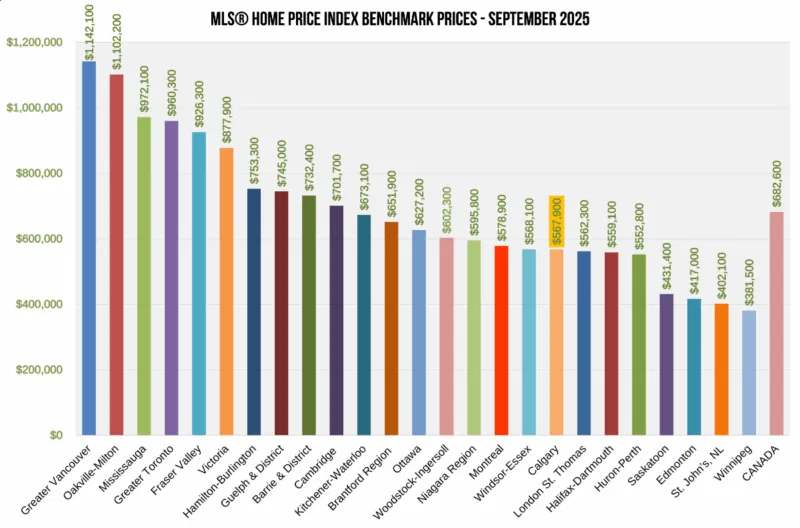
For Ontario, Canada, and the provinces: CREA — the Canadian Real Estate Association. National context, provincial trends, and MLS® Home Price Index benchmarks that enable meaningful comparisons across markets.

One honest caveat on both: the published numbers are always one to two weeks behind. They tell you what happened, not what's happening today.

What tells you what's happening today is a local broker who is actively in the market — talking to buyers, sellers, and other agents every single day, tracking what's listed, what's sold, and what didn't. That real-time intelligence isn't published anywhere. It comes from being present.

Where Not to Base a Real Estate Decision

This list is longer, and worth being honest about.

Social media. Your neighbours. Your co-workers. Your mechanic, hairdresser, pickleball friends, or golf group. Economists. Provincial or federal government forecasts. Bank of Canada projections. Your financial advisor. Your pastor.

None of these sources have access to current, specific, local data. Most of them are repeating something they read, heard, or felt — and passing it on with the confidence of someone with no professional accountability for its accuracy.

You might think I'm biased, being a realtor. I'd argue I'm a realist. I know where most people get their real estate advice. And when that advice turns out to be wrong, somehow it's always the market's fault — or the realtor's. Never the hairdresser's.

The Cost of the Fence

Real estate fence sitting could end up being a pain in the butt. Or not. But the longer you sit on it waiting for certainty that data alone can't provide, the more of the decision gets made for you by time, by circumstance, or by a market that moved while you were waiting for a clearer signal.

If you want to know what the London market is actually doing right now — not what was reported two weeks ago, and not what your neighbour thinks — that's a conversation worth having with someone who's been in it every day.


Want the real picture of London's market right now — not the noise? Reach out for a private conversation — no pressure, no pitch.

Read

Where is The London, Ontario Real Estate Market Heading

This is a historical snapshot — London, Ontario, for April 2025. Markets move month to month. For current stats and my honest read on where each part of the city is actually heading, see my London neighbourhood market updates — ten neighbourhoods, refreshed monthly. Or for what your specific home is worth in today's market, reach out for a personal analysis. No pressure, no pitch.

There are many opinions on where the London, Ontario, real estate market is heading. There are the pessimists and the optimists, the fearmongers, the “the sky is falling” crowd, and the “I don’t care” crowd!

I have included below a few facts (the truth) about the London and area market as of April 30. Briefly explain the facts and how to respond to them. Predictions are for those with nothing valid to say; hence, verbal diarrhea.

If you want to know where the London, Ontario, real estate market is headed and what you can do today to stay ahead, contact me.

Average home price

  • North London: $724,739

  • South London: $684,335

  • East London: $514,004

  • St. Thomas: $574,887

  • Central Elgin: $641,445

  • Strathroy-Caradoc: $682.149

April 2025

  • Sales: 653, down 14.3% from 2024

  • Dollar amount: $427 million, down 14.8%

  • New listings: 1,523, down 10.1% 

  • Active listings: 2,891, up 19.6%

  • Average price: $654,147, down 0.5% 

  • Months of Inventory: 4.4, up from 3.2

  • Days on the market: 21, up from 16

Year-to-date 2025

  • Sales: 2,107, down 19.2% from 2024

  • Dollar amount: $1.3 billion, down 18.4%

  • New listings: 5,190, up 1.5%

  • Active listings: 2,417. up 22.5%

  • Average price: $645,593, up 1.1%

  • Months of inventory: 4.6, up from 3.0

  • Days on Market: 24, up from 18

The table below displays April’s benchmark prices for all housing types within LSTAR’s jurisdiction and compares them with those recorded in the previous month and three months ago.

MLS® Home Price Index Benchmark Prices
Benchmark TypeApril 2025Change Over 
March 2025
Change Over
January 2025
LSTAR Composite$589,200↓4.1%↓4.6%
LSTAR Single-Family$641,100↓3.8%↓3.6%
LSTAR One Storey$583,300↓4.9%↓2.5%
LSTAR Two Storey$688,600↓3.1%↓4.4%
LSTAR Townhouse$489,1000.0%↓0.6%
LSTAR Apartment$393,800↑4.0%↓4.2%

Meaning?

For Sellers:

  • With 2,891 properties for sale, buyers have choices. Most can read, listen to, or watch the news and feel they have an advantage in the price they are willing to pay.

  • It behooves a home seller to understand that other homes compete with yours. You may feel your place is a castle, but buyers won’t.

  • Buyers know prices. They view 6-10 homes; price, condition, and location matter.

  • There are buyers out there; attract the right buyer. How? My home seller guide has quite a few tips and ideas.

For Buyers:

  • Know what is available and what you can expect within your budget.

  • Fully understand that over 60% of homes listed for sale are priced right, and the only loser in lowballing a seller is you.

  • Yes, there will be sellers who must sell, but they are in the minority.

  • Remember, you are buying a home, a place you can come home to and live in; real estate property is not a commodity. A few home buyer ideas in this market.

Read

Who Is Going To Buy Your Home In London Ontario?

Most home sellers in London, Ontario focus all their energy on how their home is marketed — the photos, the sign, the MLS listing, the open house. The more important question is who it's being marketed to. A four-bedroom home near good schools attracts families. A one-floor condo in an upscale neighbourhood attracts downsizers. Marketing to the wrong buyer wastes time, money, and momentum. Identifying the right buyer first — and building the entire marketing strategy around that specific person — is what separates a home that sells quickly at the right price from one that sits waiting for someone to notice it. Ty Lacroix, Broker at The Envelope Real Estate Group, has spent 24 years helping London sellers find the right buyer, not just any buyer.

Have you thought about who would actually buy your home in London, Ontario if you were to sell? Not in a general sense — specifically. Who is that person, what are they looking for, and where are they looking for it?

Most sellers haven't thought about this at all. And most of the marketing that gets done on their behalf hasn't either.

The Standard Approach — and Why It Falls Short

The default approach to selling a home or condo in London looks something like this: put up a for-sale sign, list it on MLS, take some photos (or doctor them), produce a brochure, maybe run an open house, and hope the right buyer happens to be scrolling at the right moment.

Open houses sell less than 1% of homes. Newspaper ads are called tombstone ads for a reason. Giant glossy magazine features arrive a month after they were relevant. And an ad with the realtor's photo larger than the home tells the buyer everything about whose interests are being served.

None of this is targeted at anyone in particular. It's broadcast marketing applied to a specific product that only one buyer needs to want. The billboard in the Sahara Desert — technically visible, but to whom, and at what cost to get there?

Don't Worry About How. It's Who.

The question that should drive every marketing decision for your home is not "how do we reach the most people?" It's "who is the right person for this home, and where are they?"

A four-bedroom, two-car garage home near good schools attracts families — not empty nesters, not singles. A one-floor, two-bedroom condo in an upscale London neighbourhood attracts downsizers looking for lock-and-leave living — not a family of four. Marketing either of those homes to the wrong audience isn't just inefficient. It's expensive, because it wastes your golden window of buyer interest on people who were never going to buy.

Buyers in London's market are comparison shoppers. They're viewing multiple homes, tracking comparable sales, and arriving at each showing with a clear picture of what they want and what they'll pay. A buyer with a good broker is laser-focused on properties that meet their specific criteria — they don't get distracted by shine that doesn't align with their profile.

What this means for you: if your home isn't attracting the right buyer, the problem usually isn't the home. It's that the marketing is talking to the wrong person — or to everyone and no one at the same time.

Focus, Narrow Down, Focus

The most effective marketing for any home starts with a clear answer to one question: who is this home actually right for? Once you know that, every decision that follows — how the home is presented, where it's promoted, what the listing copy emphasizes, which features to highlight and which to downplay — becomes significantly clearer.

A young family sees the school catchment and the backyard. A downsizer sees the main-floor primary bedroom and the absence of stairs. A move-up buyer sees the neighbourhood and the garage. Your home doesn't need to appeal to all of them. It needs to appeal deeply to the right one.

When the marketing is built around that specific buyer, the right person finds your home faster, shows up more motivated, and offers more confidently — because it's exactly what they were looking for.

If you're preparing to sell and want to understand who your home's right buyer is and how to reach them specifically, that's exactly the conversation you should have before the sign goes up.


Ready to find the right buyer — not just any buyer? Reach out for a private conversation — no pressure, no pitch.

House Seller Tips Condo Seller Tips

Read
This website may only be used by consumers that have a bona fide interest in the purchase, sale, or lease of real estate of the type being offered via the website. The data relating to real estate on this website comes in part from the MLS® Reciprocity program of the PropTx MLS®. The data is deemed reliable but is not guaranteed to be accurate.