London Ontario Real Estate. No Fluff. No Sales Pitch. Just the Truth.

 Written by Ty Lacroix — Real Estate Strategist & Broker, London Ontario 

RSS

Navigating the New Balance in London, Ontario, Real Estate
  • The London, Ontario real estate market has shifted into a balanced state, prompting some buyers to expect unrealistic discounts of up to 20% on properly priced homes.

  • Data proves these lowball tactics are unwarranted; in May 2026, homes in the London area sold for an average of 97.8% of their asking price.

  • Successfully navigating a home sale today requires a skilled, experienced Realtor who knows how to hold firm on value, manage complex conditions, and filter out unqualified buyers.

The London, Ontario, real estate market has officially balanced out. After years of rapid price growth, in which multiple offers were the norm, we have entered a phase in which both buyers and sellers are recalibrating their expectations.

However, a new challenge has emerged for homeowners planning their next move: the overzealous buyer. In today's market, even when a property is accurately priced, some buyers operate under the misconception that they can secure a home for 80% to 85% of the asking price.

The Reality of Market Value vs. Buyer Expectations

Recently, a well-priced $1,300,000 listing attracted buyers who offered $950,000 simply to reserve funds for their closing and moving costs. Another inquiry came in at $1,050,000, sight-unseen, loaded with 120-day closing conditions and financing contingencies.

These aggressive negotiation tactics might seem intimidating, but the numbers tell a different story. In May 2026, the average home price in the London-St. Thomas market was $662,292, and properties successfully sold, on average, for 97.8% of their listing price. The data confirms that giving away 15% to 20% of your home's value is entirely unnecessary.

Why You May Need a Skilled, Experienced Realtor, Not Just a Sign

The days of putting a sign on the lawn and waiting for immediate, over-asking offers have passed. Navigating this environment requires a disciplined approach. You need a professional who understands how to protect your hard-earned wealth and prevent buyers from taking advantage of the market shift.

Proper representation means having an experienced Realtor who will:

  • Have the hard conversations with buyers' agents about your property's true value.

  • Filter out offers padded with unreasonable or excessive conditions.

  • Ensure your final sale price reflects the market, not a buyer's wishful discount.

The market change is ultimately positive—it ensures buyers are financially capable and prevents unsustainable price spikes. For homeowners preparing to downsize or sell a high-value property, achieving your goal simply requires relying on facts, not opinions, to manage the sale.

Find Out Now!

Read

Why the London Ontario Real Estate Market Isn’t “Correcting” the Way You Think It Should

If you have been watching the London real estate headlines lately, you’ve probably noticed a strange tension. Interest rates are higher than they were a few years ago, buyer activity has cooled, and yet, we haven't seen the "price crash" that the doomsayers have been predicting.

Why the disconnect?

The answer lies in a fundamental shift in seller behaviour. To understand today’s market, we have to look at the difference between price and supply dynamics.

The Choice to Opt-Out

A few months ago, the conversation was about buyers being unable to participate in the market. Today, the conversation is about sellers choosing not to participate.

We are seeing a "Seller Opt-Out." These are homeowners who may have tested the market and didn’t hit their "dream number," or those who simply refuse to acknowledge today’s valuations. Because they aren't being forced to sell—they are simply pulling their signs off the lawn and staying put.

The Correction Equation

There is a common misconception that housing markets correct simply because buyers hesitate. That isn't actually how it works.

Markets correct when sellers are compelled to sell regardless of the price.

Until we see a wave of "forced" inventory (due to financial distress or external pressure), what we are experiencing isn't a crash—it’s a stalemate. Prices are backward-looking—they tell us what happened yesterday. Supply dynamics are forward-looking—they tell us what will happen tomorrow. Right now, the supply is being held back by choice.

Solving the Problem vs. Navigating the Shift

In my last post, I talked about the difference between a Realtor who is a "Problem Solver" and one who is a "Value Creator." This market is the ultimate test of that distinction.

A Problem Solver sees a seller who can't get their price and suggests a simple fix: "Lower the price." That is reactionary. It solves the "problem" of the house not selling, but often at the expense of the client’s wealth.

A Value Creator looks at the forward-looking supply dynamics. They ask:

  • "If you don't sell now, what is the cost of waiting?"

  • "How can we position this property to be the 'only choice' for the few active buyers?"

  • "Is there a strategic way to leverage your equity now to gain an advantage elsewhere?"

Outstanding Realtors don't just put out the fire of a stagnant listing. They create a strategy that accounts for the fact that today’s sellers have choice.

If you are a homeowner sitting on the sidelines, the question isn't just "What is my house worth?" The question is "What is my next move worth in a market defined by choice, not force?"

What Is Your Home Seller Market Position Overview?

Read

Why Searching for "The Perfect Home" is a Financial Liability in London

Real estate television has trained buyers to shop for quartz countertops and grey paint — and it's costing them equity. In London, Ontario's current market, paying a premium for cosmetic finishes while ignoring a property's underlying bones, lot, layout, and neighbourhood trajectory is one of the fastest ways to overpay and underprotect your investment. The buyers who come out ahead aren't the ones who found the prettiest home. They're the ones who bought the right one. Ty Lacroix, Broker at The Envelope Real Estate Group, has spent 24 years helping London buyers look past the staging and protect their equity.

Real estate television has done a quiet disservice to an entire generation of home buyers.

It has trained people to walk into a property and immediately scan for quartz countertops, subway tile backsplashes, and the right shade of grey paint. It has turned one of the largest financial decisions of a person's life into an emotional search for an aesthetic — and in London, Ontario's current market, that mindset has a real dollar cost.

Shopping for the perfect home is a financial liability. Here's why.

The Cosmetic Trap

When you focus on finishes, you are almost always paying a premium for someone else's taste.

In real estate, this is called buying the flip — paying top dollar for cosmetic camouflage while ignoring what's underneath it. Fresh paint, new staging, trendy fixtures, and a renovated kitchen: these things photograph beautifully and trigger emotion at a showing. They also add cost to the purchase price that doesn't hold its value when the market shifts.

Paint colours and backsplashes are not equity. When it's time to sell — especially in a softer market — the buyers who paid a premium for someone else's renovation are the first ones to feel the gap between what they paid and what the market will give them back.

What Actually Holds Value

A home that protects your equity over time isn't the one that looks the best on showing day. It's the one with the right underlying fundamentals — the things that can't be repainted, restaged, or renovated away.

Four things determine a property's lasting value:

The lot. Size, zoning, and orientation. A well-positioned lot in the right corridor holds value through market cycles that cosmetic renovations never will.

The bones. Structural integrity, foundation condition, and the age of the four big systems: roof, HVAC, electrical, and plumbing. A beautiful kitchen on top of a failing furnace and a 25-year-old roof is a liability with good lighting.

The layout. Is the floor plan genuinely liveable for the way people actually live, or does it have quirks that will limit your buyer pool when it's time to sell? Functional obsolescence — an awkward layout, too few bathrooms, no main-floor bedroom — is invisible at a showing and expensive at resale.

The micro-market. What is the pricing history and absorption rate for this specific street, in this specific neighbourhood? Every London corridor has its own ceiling. Buying above it, for any reason, puts your equity at risk from day one.

The Question Every Buyer Should Ask Before Signing

Before you submit an offer, stop looking at the kitchen island and ask yourself one honest question:

"If life changes and I am forced to sell this property in three years during a down market — who is my buyer, and does this home have what it takes to protect my original equity?"

If you can answer that confidently, you're making a sound decision. If you can't, you're betting on the market staying kind to you — and that's not a strategy.

What This Means for You

This isn't about suppressing emotion. A home is where you live, and how it feels matters. But the buyers who come out ahead are the ones who let the fundamentals set the floor and let the finishes influence their preference between two sound options — not the ones who fell in love with a kitchen and paid whatever it took.

After 24 years guiding buyers in London, I can tell you the regret stories almost always start the same way: "We loved how it looked." The success stories start differently: "We asked the right questions before we signed."

If you're buying in London and want to know what those questions are — before you're sitting across from a seller with an offer on the table — that's the conversation worth having first.


Know what you're actually buying before you commit. Reach out for a private conversation — no pressure, no pitch.

For the complete buyer framework: London Ontario Home Buying Strategy →

Read

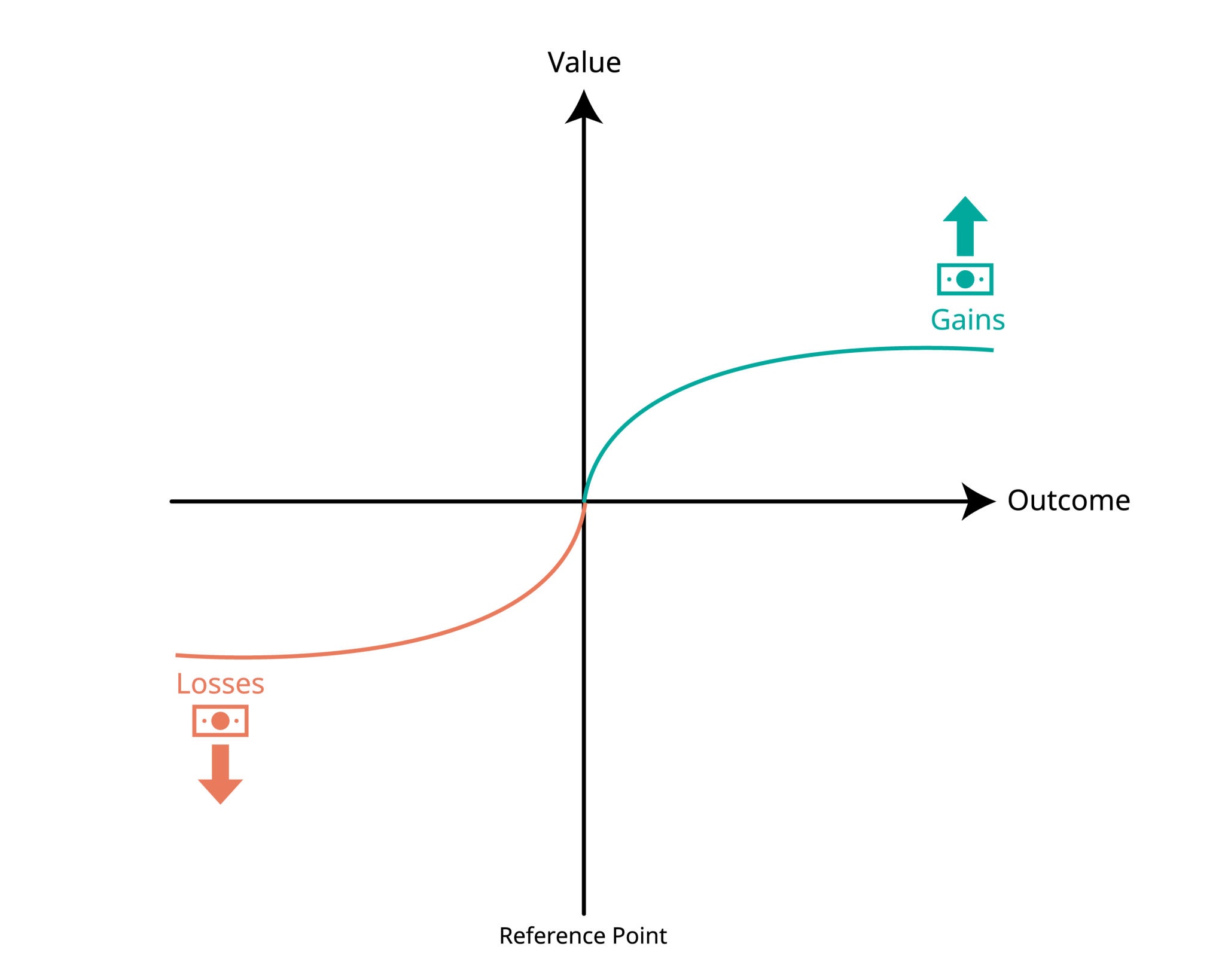
The Bottleneck in London, Ontario Real Estate: Are You Paralyzed by "Loss Aversion"?

London, Ontario's housing market isn't in free fall or in a frenzy — it's in a bottleneck, and that bottleneck is mostly psychological. Sellers anchored to 2022 peak prices are listing at numbers buyers won't validate. Buyers with the means to purchase are watching and waiting for the price to match the value. The result: high inventory, low movement. Behavioural economics calls this loss aversion — the proven tendency for the pain of a loss to feel twice as powerful as the pleasure of a gain. The sellers and buyers who understand this dynamic are the ones transacting. The ones who don't are waiting for a market that isn't coming back. Ty Lacroix, Broker at The Envelope Real Estate Group, has spent 24 years helping London clients read the psychology behind the numbers — and act accordingly.

If you've been watching the London, Ontario housing market lately, you've probably felt it.

There's a tension in the air. We aren't in a free-fall. We aren't in a frenzy. We're in a bottleneck — and it's not mainly about interest rates or supply chains. It's psychological.

The Behavioural Economics Behind the Stalemate

In behavioural economics, there's a concept called Prospect Theory. It tells us that the pain of a loss is psychologically about twice as powerful as the pleasure of an equivalent gain. That single quirk is doing more to freeze the London market right now than any interest rate announcement.

Here's how it plays out on both sides of the transaction.

The seller's paralysis. Many sellers are sitting on five-plus months of competition but refuse to compete. They're anchored to the peak prices of 2022. Selling for today's market value feels like losing equity — even when that equity only ever existed on paper, in a moment that has since passed. So they list at yesterday's price and wait. The home sits. The days-on-market clock runs. The listing goes stale. And the seller's negotiating position erodes quietly while they hold out for a number the market stopped paying two years ago.

The upper-bracket buyer's discipline. If you're a buyer in the higher price ranges, you likely have the means and the intent to purchase. You can see the inventory — there's plenty of it. But you're disciplined. You aren't willing to validate a seller's nostalgia with your capital. You're waiting for the price to reflect the value, not the seller's memory of what the market once was. And with five months of inventory giving you choices, you can afford to wait.

High Inventory, Low Flow

The result is a specific kind of frustration: the houses exist, but the transactions don't.

Buyers are saying: "I see the house, but I'm not paying that."

Sellers are saying: "I have the house, but I'm not taking less."

Both positions feel rational to the person holding them. That's what makes this kind of market so stubborn — nobody feels like they're being unreasonable, and yet nothing moves.

How to Win in a Stalemate

The sales are happening. Just not where you'd expect to see from public listing sites. The movement is concentrated in listings where the psychology has already shifted — where the seller has accepted today's market instead of waiting for yesterday's to return.

If you're a buyer, the opportunity is in identifying sellers who have moved past loss aversion and are ready to transact at current market value. Those are the listings where you have real negotiating room and where a well-structured offer lands. Chasing the stubborn listings wastes your time and your leverage.

If you're a seller: five months of inventory is your competition, not your comfort. Buyers have choices — more than they've had in years. To move your home in this market, you need to be the sharpest value in the pile, not another overpriced listing giving buyers a reason to keep looking. Pricing ahead of the market, not behind it, is the only way through the bottleneck.

The inventory is there. The question — for both sides — is whether the price reflects the reality of today's market or the memory of a different one.

I help my clients tell the difference. And I tell them the truth about which side of that line they're on, before it costs them.


Ready to stop watching and start moving? Reach out for a private conversation — I'll give you a straight read on where the real opportunity is right now. No pressure, no pitch.

Read

The Problem With Real Estate Advice in London Ontario

The problem with real estate advice isn't that there's too little of it — it's that there's an overwhelming, contradictory abundance of it, most of it free, and free advice is worth exactly what you paid for it. A search for home selling tips returns hundreds of millions of results. Add in advice from relatives, neighbours, coworkers, and well-meaning strangers, and it's no wonder sellers and buyers freeze. Information without judgment doesn't help anyone. Ty Lacroix, Broker at The Envelope Real Estate Group, has spent 24 years helping London sellers and buyers cut through the noise and apply the three things that actually matter.

The problem with real estate advice in London, Ontario is that there's an abundance of it. And it's free. What's free advice actually worth? Exactly.

A quick search for tips on selling a home returns roughly 697 million results. If you were an average reader working through them one at a time, that would take you over 110 years. Search for buying tips, and you'll find around 790 million results — call it 126 years of reading, if you somehow had that kind of time.

Now add the advice that doesn't show up in a search at all: opinions from relatives, neighbours, coworkers, your mortgage broker's cousin, and anyone else who's ever bought or sold a home and feels qualified to weigh in. No wonder so many sellers and buyers freeze. There's no shortage of information. There's a shortage of judgment.

Information Isn't the Same as Action

You can read every article, watch every YouTube video, and listen to every economist with an opinion on interest rates — none of it does you any good without common sense applied to your specific situation. Mark Twain put it well: "The reason there is so much common sense in the world is that very few use it."

Learning without action doesn't move you forward. You can study a trail map for hours, but it doesn't get you up the mountain. At some point, the research has to turn into a decision — and that decision needs to be grounded in your actual circumstances, not a generic article written for a national audience that's never seen your home or your market.

What Actually Matters: Three Things for Sellers

I'm not going to claim I have all the answers. What I can tell you, after 24 years in this market, is that real estate success as a seller comes down to three things — and only one of them is something you hand off to someone else.

Price. This is yours to decide, but it should be decided with current local data, not hope, not what the neighbour got two years ago, and not a number that simply feels right.

Product. Also yours — the condition, presentation, and preparation of your home before it goes to market. This is where the small, inexpensive fixes consistently return more than they cost.

Promotion. This is where a real estate broker earns their value. Marketing reach, buyer targeting, professional presentation, and negotiation skill are what a good broker adds on top of the price and product you've already controlled.

If a broker isn't adding real value to the promotion side of that equation, it's fair to ask what exactly you're paying for.

What Actually Matters: One Thing for Buyers

For buyers, the obstacle is rarely a lack of information. It's letting emotion and overcaution pull in opposite directions at the same time — falling in love with a home and simultaneously being too afraid to commit to a fair number because you're worried about overpaying by a few thousand dollars on a decision worth hundreds of thousands.

Both extremes cost you. Buying with pure emotion means overpaying. Refusing to ever commit means losing homes that were genuinely right for you to buyers who moved with confidence. The answer isn't more research. It's a clear-eyed read of the data paired with the willingness to act on it.

The Bottom Line

You don't need more articles. You need someone who can take everything you've read, everything you've heard from well-meaning people in your life, and tell you honestly what actually applies to your situation in London's market today.

If you're trying to sort through the noise and get to a decision you can actually act on, that's exactly the conversation worth having.


Tired of conflicting advice? Reach out for a private conversation — I'll give you the straight read on your specific situation. No pressure, no pitch.

Read

Real Estate Pessimism London Ontario

There's a lot of pessimism about London, Ontario's real estate market right now — fed largely by headlines designed to grab attention, not inform decisions. Yes, there's more inventory than a couple of years ago, and some buyers are sitting out. Both are true. But the same data can be framed as a crisis or accurately — and the accurate version still shows homes selling at strong prices every single month. Ty Lacroix, Broker at The Envelope Real Estate Group, has spent 24 years watching headlines come and go while patient, prepared buyers and sellers keep transacting regardless.

There's a lot of pessimism right now about the London, Ontario real estate market being a buyer's market. Some of that pessimism is fed by talking heads on TV and radio, and some by people who simply enjoy being the bearer of bad news.

There's no disputing the underlying facts: there are more homes for sale now than there were a couple of years ago, and some buyers are hesitant or unable to act. Both of those things are true.

But people gravitate toward pessimism — especially when it comes to real estate. The same data, framed two different ways, produces two very different reactions.

The Same Facts, Two Headlines

Which headline gets more attention: a plane crash, or the fact that tens of thousands of flights landed safely yesterday? Both are true on any given day. One gets the coverage.

It's the same with real estate. "It's a buyer's market" sounds alarming. "Homes in London are selling at 97.4% of asking price" is the same underlying reality, told accurately instead of dramatically.

Or consider unemployment. A 5% unemployment rate sounds concerning in isolation. The same number means that 95% of people in the workforce have jobs. Both are accurate. Only one is designed to alarm you.

What's Actually Happening

Some buyers who would genuinely benefit from buying right now aren't acting — not because the opportunity isn't there, but because they're missing one piece of what they need to move forward: the financial readiness, a clear need driving the decision, or simply the confidence to act in a market that the headlines have told them to fear.

For buyers who do have what they need — readiness, a real reason to move, and the financial capacity to act — this is a genuinely strong opportunity. For sellers who are equally prepared — priced correctly, presented well, and ready to engage with serious buyers — this remains a good time to sell.

Action Gets Results

I'm a firm believer that action produces outcomes. The commentators, the economists, and the news anchors aren't the ones buying or selling homes. They're reporting on a market they don't have a personal stake in transacting within.

Homes and condos in London continue to sell. It may take longer than it did during the frenzied years, but a patient, prepared homeowner — and a patient, prepared buyer — consistently come out ahead of anyone waiting for the headlines to feel better before they act.

If you're trying to decide whether now is the right time for your specific situation, that decision should be based on your readiness and your goals — not on which headline got the most clicks this week.


Ready to look past the headlines and talk about your actual situation? Reach out for a private conversation — no pressure, no pitch.

Read

You Are Not A Real Estate Spreadsheet

A spreadsheet can calculate mortgage payments, property taxes, and utility costs. It can't calculate what a private backyard is worth to you, what a particular view means, or what it feels like to walk into the right home. Investors run spreadsheets because they're buying an asset. Homebuyers are buying a life — and reducing that decision to a column of numbers misses almost everything that actually matters. Ty Lacroix, Broker at The Envelope Real Estate Group, has spent 24 years helping London buyers find the home that's right for them, not just the one that pencils out.

Will a real estate spreadsheet help you decide on buying a home in London, Ontario? In my years as a broker, I hear it constantly: "I'll add it to my spreadsheet and get back to you." Or, "I'll run the numbers and see if it works."

Here's the honest question worth asking back: what exactly does a spreadsheet account for?

A spreadsheet doesn't have rationality, reasonability, or common sense built into it — it only has whatever numbers you feed it. It can't account for optimism, patience, or the simple desire to feel settled. It has no concept of uncertainty, doubt, or regret, and it doesn't suffer from analysis paralysis the way a person staring at it for the tenth time does. A spreadsheet can't rationalize what a private backyard is worth to you, what a particular view means every morning, or why a specific layout finally feels like home after years of living somewhere that didn't.

It also can't weigh your commute, whether you need a dedicated work-from-home space, the school catchment, how walkable the neighbourhood is, or whether the area's demographics genuinely fit your stage of life.

When a Spreadsheet Actually Makes Sense

When I worked with investors, nearly all of them ran spreadsheets — and the most successful ones did it properly. They modelled a 20-year time horizon, deliberately stripped emotion from the decision, and factored in what might change over that period: new nearby construction, shifting traffic patterns, or regulatory changes that could affect their return. For an investor, that's exactly the right approach. The property is an asset. The spreadsheet should rule.

A home buyer's decision is different in kind, not just in degree.

What a Spreadsheet Actually Tells You

Morgan Housel put it simply: financial decisions are not made in spreadsheets or textbooks. For a home buyer, a spreadsheet is genuinely useful for one thing — calculating your mortgage payment, property taxes, and utility costs. That's it. That's the full extent of what it can responsibly tell you.

A home may not be the most financially optimal investment you'll ever make. But a home is you. It's your family, your retreat, your safety zone, the place you actually live your life rather than just hold as an asset on paper. There's no column for that. There's no formula that captures what it's worth to wake up in the right place.

Prudence has its place, and the numbers matter — knowing what you can genuinely afford protects you from a decision you'd regret. But once the numbers confirm you can afford it, the decision about which home is the right one is a human decision, not a mathematical one. Treating it purely as the latter means optimizing for the wrong outcome.

If you're looking for a home in London and trying to balance what makes financial sense with what actually feels right for your next chapter, that's exactly the conversation worth having — with someone who understands both sides of that equation.


Looking for the right home, not just the right number? Reach out for a private conversation — no pressure, no pitch.

For the complete buyer framework: London Ontario Home Buyer's Guide →

Read

Can You Time The Real Estate Market in London Ontario

Timing the real estate market in London, Ontario is a guessing game. Anyone who tells you otherwise is guessing too — they just sound more confident about it. The market doesn't care when you want to buy or sell. It moves according to forces that have nothing to do with your timeline, preferences, or plan. What you can control is your preparation, your mindset, and your decision to act when your circumstances call for it — not when the headlines say it's the right moment. Ty Lacroix, Broker at The Envelope Real Estate Group, has spent 24 years watching buyers and sellers wait for the perfect moment that never quite arrives.

The market doesn't care when you want to move. It doesn't adjust to your preferred timeline, your financial situation, or your comfort level. Quality, well-located homes end up sitting on the market longer than they should, or unsold entirely, not because the market is broken but because the seller's expectations didn't align with what the market was actually willing to pay at that moment.

Here's the most important thing to understand: you are the market. You, and five or fifty or five hundred other buyers and sellers making decisions at roughly the same time, each acting on their own situation, their own emotions, and their own financial position. Nobody controls the market. The market is just the aggregate of all those individual decisions happening at once.

Three Examples of What You Can't Control

The Florida snowbird. You've decided to sell your place in Florida. So have ten of your neighbours. You cannot control their motivation, their urgency, or what price they're willing to accept. Their decisions will affect yours whether you like it or not. What you can control is your own commitment to the outcome — and whether you're genuinely ready to pay the price the market sets, not the one you'd prefer.

The competing listing. You've listed your condo at a price you believe is fully justified by the comparables. A week later, another unit in the same building lists for 15% higher — or lower. You didn't see it coming. You can't undo it. What you can control is how quickly you read the new information and whether you adapt your strategy or dig in stubbornly.

The interest rate merry-go-round. When rates were below 2%, you waited — surely they'd go lower. When they hit 4.5%, you waited again — surely they'd come down. Meanwhile, the right home passed by twice. Merry-go-rounds are for children. At some point the waiting itself becomes the most expensive decision you've made, because the opportunity cost of time is real and it compounds quietly.

What You Can Actually Control

I'm a broker, not an economist, and timing the market is not something I can do. If I give you an opinion about where the market is heading, that opinion is, in reality, a guess dressed up in experience. What I can control — and what any good broker should be focused on — is work ethic, local knowledge, honest advice, and the patience to stay the course when the market doesn't cooperate with anyone's preferred timeline.

The clients who consistently make good real estate decisions aren't the ones who called the market correctly. They're the ones who understood their own situation clearly, made a decision based on their real circumstances, and acted on it without waiting for a certainty that would never arrive.


Ready to make a decision based on your situation rather than the headlines? Reach out for a private conversation — no pressure, no pitch.

Read

Real Estate Denial Is Rampant!

Most people who are stuck in a real estate decision — whether to sell, downsize, or make a move they know they need to make — aren't dealing with a problem. They're dealing with a situation. The difference matters more than it sounds. A problem is something that can't be solved. A situation is something that can, once you stop denying it and start doing something about it. Ty Lacroix, Broker at The Envelope Real Estate Group, has spent 24 years watching people sit on the fence about a decision already made in their hearts — and helping them find the clarity to act on it.

Most of us have been in real estate denial at one time or another. We confuse our situation with a problem, and once something becomes a "problem," it feels unsolvable — so we stop trying to solve it.

Bear with me here while I try to explain this in a straightforward way.

Is It a Situation or a Problem?

There's a difference, and it matters.

You don't have enough saved for a down payment yet. That's a situation. Mortgage payments feel too high right now. That's a situation. You can't find a home you love in the area you want with every feature on your list. That's a situation. Your spouse or your children don't want to move. That's not a problem — that's a situation. Your house has too many stairs, but you love the garden and the neighbours and the street you've lived on for twenty years. That's a situation. Sitting on the fence while circumstances make the decision for you — also a situation.

A situation can be worked with. A situation has options, even when none of them feel comfortable yet. A "problem" — once you call it that — tends to become a reason to quit, blame someone else, or deny any responsibility for what's actually happening.

Albert Einstein put it plainly: using the same mindset that got you where you are won't get you somewhere different.

What Doing Something About It Actually Looks Like

Think about the single parent working two jobs — not comfortable, not easy, but moving forward. Or the couple saving every spare dollar toward a home while managing everything else life requires. They don't call their situation a problem. They call it something to solve, and they keep solving it one paycheque at a time.

The same applies to a homeowner who knows their house is too big, too much to maintain, too many stairs — but loves the garden and hasn't been able to face what the next step looks like. That's a situation. It has a solution. The solution starts with a conversation, not a commitment to anything.

The Denial Part

Denial in real estate looks like this: waiting for the market to be "better" before selling, even when the current market is workable. Waiting for the perfect home before listing yours, even when the right move is to start the process. Waiting for everyone in the family to agree completely before taking a first step, even when that agreement may never come unanimously.

As Marcus Aurelius wrote in Meditations: "You shouldn't give circumstance the power to rouse your anger, for they don't care at all."

Circumstances don't resolve themselves while you wait for the right moment. They just become a different set of circumstances — sometimes better, sometimes not.

The One Thing Denial Doesn't Do

Sticking your head in the sand doesn't change your situation. It just delays it — usually until circumstances have narrowed your options rather than expanded them.

If you know a move is coming, the best time to start thinking about it clearly is before you have to. Not when the stairs become impossible, or the maintenance becomes unmanageable, or the timeline becomes compressed by something outside your control. My most satisfied clients are the ones who started the conversation before urgency made it harder.

If your situation has been quietly becoming a decision you've been avoiding, that's worth a conversation. No obligation, nothing to sign — just a straight talk about what your options actually look like from where you are right now.


Is a real estate decision sitting in the back of your mind? Reach out for a private conversation — no pressure, no pitch, and nothing to sign. Just clarity.

Read

Transactional or Transformational Realtor?

Every realtor in London, Ontario will tell you they're looking out for you. The ones who are transactional mean they'll do the job — show the homes, write the offer, collect the commission. The ones who are genuinely invested in your outcome mean something different: they'll tell you the truth when it's inconvenient, protect you when you're about to make a mistake, and still be available after the transaction closes. The difference between the two isn't visible on a website. It shows up in how they behave when the easy answer and the honest answer aren't the same thing. Ty Lacroix, Broker at The Envelope Real Estate Group, has spent 24 years on the transformational side of that line — not because it's more profitable, but because it's the only approach worth the work.

Who would you want representing you in one of the biggest financial decisions of your life — a realtor who's in it for the transaction, or one who's genuinely invested in your outcome?

The distinction sounds obvious. In practice, it's harder to spot than most buyers and sellers realize until it's too late to matter.

What Transactional Looks Like

A transactional realtor operates on a simple exchange: you give them a listing or a buyer's agreement, they give you access to the market, and everyone hopes the outcome works out. The job is to move the transaction forward. Whether that transaction is actually right for you is a secondary concern — if it's a concern at all.

Think about going to a doctor feeling unwell. The doctor glances up, reaches for the shelf, hands you four pill bottles, tells you to drink lots of water, stand on one leg, and whistle Dixie. If you're not feeling better in a month, make another appointment. The doctor made no real effort to understand your history, your concerns, or what's actually happening. The visit happened. The prescription was issued. Transaction complete.

There's no meaningful difference between that doctor and a realtor who will tell you what you want to hear and show you whatever it takes to get you to sign something. The paperwork gets done. The commission gets paid. Whether the outcome was right for you is a question nobody asks after closing.

What Transformational Looks Like

A transformational realtor starts from a different premise: the job is to understand your situation well enough to protect you from the decisions that would hurt you, and to guide you toward the outcome that actually serves your life — not just the transaction.

That means taking the time to understand your goals, your concerns, your timeline, and your fears — not to use them as leverage, but to make sure the advice you receive reflects your reality. It means telling you the truth about a home's condition even when it is inconvenient. It means pushing back when a pricing decision doesn't hold up against the data, even when you'd rather hear agreement. It means being available after the deal closes — because the questions don't stop at possession day, and neither does the relationship.

Most buyers and sellers don't know what they don't know going into a transaction. A transformational realtor's job is to make sure that gap doesn't cost them.

How to Tell the Difference

Here's the honest answer: you'll know. Not always immediately, but quickly. Listen to your instincts in the first conversation. Does this person ask questions, or do they have answers ready before you've finished talking? Do they tell you what you want to hear, or what you need to know? Are they in a hurry to get to the paperwork, or do they seem genuinely interested in understanding your situation first?

The transactional realtor needs your listing or your buyer's agreement. The transformational one needs to know whether they can actually help you — and if they can't, they'll say so.

You can tell the difference. Trust yourself.


Looking for the kind of conversation where the advice comes before the paperwork? Reach out directly — no pressure, nothing to sign.

Want to know more about how I work? About Ty Lacroix →

Read

Real Estate Fence Sitting in London Ontario?

Real estate fence sitting in London, Ontario is practically a pastime — buyers and sellers waiting for certainty that never quite arrives, while opinions, biases, and social media headlines fill the gap where real data should be. The actual facts about London's real estate market come from two places: LSTAR for local data and CREA for provincial and national figures. Everything else — economists, bank forecasts, neighbours, pickleball friends, your pastor — is noise dressed as intelligence. Ty Lacroix, Broker at The Envelope Real Estate Group, is in this market every day, talking to buyers, sellers, and agents, and can tell you what's actually happening right now — not what was reported two weeks ago.

Real estate fence-sitting in Canada seems to have become a pastime for anyone considering buying or selling a home. Why? Is it a buyer's market or a seller's market? Are prices too high? Are interest rates going up or down? Is now the right time — or should you wait just a little longer?

The fence is comfortable. It's also expensive, if you stay on it long enough.

If Numbers Don't Lie, Is It the Numbers — or How They're Created and Interpreted?

I talk to buyers, sellers, realtors, and mortgage brokers every day about the London, Ontario real estate market. At the end of most conversations, I ask the same question: "Where did you get that information?"

The answers reveal a lot. Miles Kington put it well: "Knowledge is knowing that a tomato is a fruit. Wisdom is not putting it in a fruit salad."

Opinions are not facts. Biases are not facts. Perceptions, beliefs, emotions, gut feelings, and social media feeds are not facts — even when they're delivered with complete confidence by someone who means well.

Where the Real Real Estate Facts Come From

There are two authoritative sources for real estate data in this market.

For London and St. Thomas specifically: LSTAR — the London St. Thomas Association of Realtors. Their monthly statistics cover sales volume, average prices, days on market, inventory levels, and benchmark prices by property type and area. This is the ground-truth data for what's actually happening in London.

For Ontario, Canada, and the provinces: CREA — the Canadian Real Estate Association. National context, provincial trends, and MLS® Home Price Index benchmarks that enable meaningful comparisons across markets.

One honest caveat on both: the published numbers are always one to two weeks behind. They tell you what happened, not what's happening today.

What tells you what's happening today is a local broker who is actively in the market — talking to buyers, sellers, and other agents every single day, tracking what's listed, what's sold, and what didn't. That real-time intelligence isn't published anywhere. It comes from being present.

Where Not to Base a Real Estate Decision

This list is longer, and worth being honest about.

Social media. Your neighbours. Your co-workers. Your mechanic, hairdresser, pickleball friends, or golf group. Economists. Provincial or federal government forecasts. Bank of Canada projections. Your financial advisor. Your pastor.

None of these sources have access to current, specific, local data. Most of them are repeating something they read, heard, or felt — and passing it on with the confidence of someone with no professional accountability for its accuracy.

You might think I'm biased, being a realtor. I'd argue I'm a realist. I know where most people get their real estate advice. And when that advice turns out to be wrong, somehow it's always the market's fault — or the realtor's. Never the hairdresser's.

The Cost of the Fence

Real estate fence sitting could end up being a pain in the butt. Or not. But the longer you sit on it waiting for certainty that data alone can't provide, the more of the decision gets made for you by time, by circumstance, or by a market that moved while you were waiting for a clearer signal.

If you want to know what the London market is actually doing right now — not what was reported two weeks ago, and not what your neighbour thinks — that's a conversation worth having with someone who's been in it every day.


Want the real picture of London's market right now — not the noise? Reach out for a private conversation — no pressure, no pitch.

Read

A Real Estate Conundrum: Buy or Sell First?

Buy or sell first? It's the most common real estate conundrum London, Ontario homeowners face — and whatever you choose carries real risk. Selling first gives you certainty on your proceeds but puts you under time pressure to find the right home before your closing date. Buying first removes that pressure but requires bridge financing and the confidence that your current home will sell at the right price. In today's London market, where sellers expect firm offers and sale-of-home conditions are rarely accepted, buying first is almost always the more controlled strategy — if you have the right plan in place. Ty Lacroix, Broker at The Envelope Real Estate Group, has guided hundreds of London homeowners through this decision over 24 years and knows exactly how to sequence a move so you stay in control.

The most pressing real estate conundrum for most London, Ontario homeowners is also the most honest one: should I buy first, or sell first? And the honest answer is that whatever you choose carries risk. Knowing what those risks are upfront — and having a plan to manage them — is what separates a smooth transition from a stressful one.

As La Rochefoucauld observed: "The truest way to be deceived is to think oneself more knowing than others."

If You Sell First

Selling first gives you one significant advantage: you know exactly what you're working with. The proceeds are confirmed, the financing picture is clear, and there's no uncertainty about whether your current home will sell before you need it to.

The disadvantage is equally significant. The moment you accept an offer, you have a closing date — and now you're under pressure to find the right home, in the right neighbourhood, at the right price and condition, before that date arrives. If the right home isn't available, you have two choices: settle for something that isn't quite right, or scramble for temporary housing while the search continues. Neither is comfortable, and both are expensive in different ways.

If You Buy First

Buying first is the more controlled approach — and the one I recommend for most clients who are in a position to do it.

When you buy first, there's no deadline forcing your hand on the purchase. You can find the right home, negotiate from a position of patience rather than urgency, and take possession when the timing works for you. Once you have a firm agreement on your new home and a confirmed closing date, you list your current home with a clear strategy and a known timeline. You're in the driver's seat.

The discomfort is the financing gap between the two closings. Most people immediately assume this is a bigger problem than it is. Bridge financing — a short-term loan that covers the gap between your purchase closing and your sale closing — is available through most lenders and is often less expensive than people expect. If you have significant equity in your current home, your broker and your lender can help you structure this cleanly before you ever make an offer on the new property.

The Condition That Used to Help — and Rarely Works Anymore

In an earlier market, you could make an offer on a new home conditional on the sale of your current one. That condition gave buyers a safety net — if the current home didn't sell, the purchase didn't proceed. Today, sellers in London expect firm offers. Sale-of-home conditions are rarely accepted in today's market, because sellers want certainty, not a conditional commitment that may never firm up. Bump clauses exist, but they create their own complications. In most cases, a conditional purchase simply isn't a viable strategy anymore.

The Decision That Keeps You in Control

The buyers and sellers I see struggling most are the ones who sold first without a plan for what comes next, then found themselves rushing — making compromises on the purchase they'll feel for years.

The ones who navigate this best are the ones who understood the sequence before they started. Buy first, with bridge financing in place; list the current home with a strategy and timeline; and close both transactions in order. No rushing. No settling. No sleeping on a friend's couch between closings.

As Carl Richards wrote: "Risk is left over after you've thought of everything." The goal isn't to eliminate risk — it's to minimize what's left after a clear plan has accounted for everything it can.

If you're facing this decision in London and want to map out the right sequence for your specific situation — financing, timing, market conditions, and all — that's exactly the conversation to have before anything is listed or offered.

[CTA block]
Buy or sell first? Let's map out the right sequence for your specific situation. Reach out for a private conversation — no pressure, no pitch.

See how the full selling process actually works: How Selling Your Home Actually Works in London Ontario

Read
This website may only be used by consumers that have a bona fide interest in the purchase, sale, or lease of real estate of the type being offered via the website. The data relating to real estate on this website comes in part from the MLS® Reciprocity program of the PropTx MLS®. The data is deemed reliable but is not guaranteed to be accurate.