RSS

Deciding on a Price To List Your For Sale in London Ontario?

Deciding on a price to list your home for sale in London Ontario is one of the most crucial decisions you must make!  I wrote about the four core ingredients in selling a home in a previous blog. Below are some bullet points; though brief, they matter!

The Benefits Of Proper Pricing

A Quicker Sale! The right price leads to a faster sale, saving you on mortgage payments, real estate taxes, insurance, and other carrying costs.

Less Inconvenience: Preparing your home for showings and maintaining a clean property. Making arrangements for children and pets, and generally altering your lifestyle, takes time and energy. Proper pricing shortens market time.

Increased Buyer Representatives:   When salespeople are excited about a property and its price, they make special efforts to contact all potential buyers and show the property as soon as possible.

More Qualified Buyers: Pricing your home at market value will attract more qualified buyers. They have been pre-approved by a bank for a certain amount.

Higher Marketing Exposure: Buyer inquiry calls are more readily converted into showings when price is not a deterrent. Why? Home buyers know pricing; if your price is unreasonable, they won’t even look at the MLS listing.

Potentially Higher Offers. Buyers are much less likely to make a low offer when a property is priced right. Why? The fear of missing out!

The Drawbacks of Pricing a Home Too High

Less Activity: Realtors and their buyers will not visit the property if they feel the price is out of range to others on the market.

Lower Marketing Response: Buyer excitement will be directed toward other properties that offer better value.

Loss of Qualified Buyers: The property will appear to offer fewer amenities than comparably priced properties in the same price range.

Attracts the Wrong Buyer: Serious, qualified buyers will feel they should get more for their money.

Helps The Competition: The high price makes the other homes for sale look like a bargain!

The Elimination of Offers: A fair-priced offer will be lower than the asking price. Some buyers and their representatives do not want to insult the seller. Yes, buyers also have feelings! And a heart!

Appraisal Problems? Appraisers base their value on what comparable properties have sold for.

Lower Net Proceeds: An overpriced property will eventually sell for less than if appropriately priced. Not to mention the extra carrying costs.

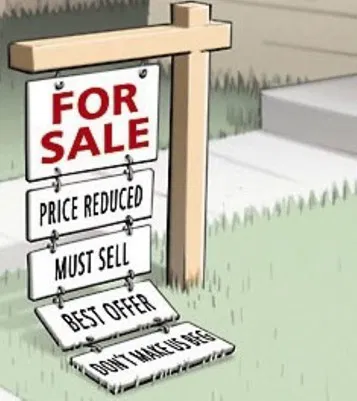
A sign you do not want when selling a house in London Ontario

A sign that shows that pricing a home inconsistently with the market is not good!

More Home Seller Tips

Read

Guide To Help Seniors Sell Their Home

The following guide to help seniors sell their home was written by Nina Dorion, a home stager, and I am impressed with her guide, which was directed at Realtors and aligned with how my team and I work. I should note that, in some cases, home staging may not be necessary due to financial or time constraints.

I have copied its entirety below.

Ask a Stager: A guide to helping seniors sell their home

The process of selling a home is challenging for most people, but for seniors, it can feel particularly overwhelming. For many, a house is more than a property; it’s a lifetime of memories, a place where they’ve raised families, celebrated milestones and shared countless moments. 

As the agent, helping seniors navigate this journey requires not only professionalism but also empathy, patience and an understanding of their unique needs. 

So, what steps can you take to support your senior clients in preparing their homes for sale so they can transition smoothly into the next chapter of their lives?

Understanding the emotional challenges seniors face

For seniors, selling their home often means leaving behind a long history filled with personal memories. Unlike younger sellers who may be ready for a new adventure, seniors are typically entering a downsizing or retirement phase, often due to health or financial reasons, or simply the desire to live in a more manageable space.

Approach each conversation with empathy, acknowledging that the process can feel like a loss. Open communication is essential; listen to their concerns, answer questions thoughtfully and avoid rushing them into decisions. Respecting their emotions and sensitivity to their needs can help build trust, which is crucial to a smooth experience.

1. Explain how the selling process has changed over the years

Seniors may not have sold a home in decades, so it’s essential to explain how the selling process has evolved. In past decades, selling homes was simpler, with fewer digital elements, less staging, and a more localized market. Today, buyers’ expectations are higher due to online listings, virtual tours, professional staging and high-quality photography.

Explain that these changes are designed to maximize their home’s appeal and increase its market value. Show them that these enhancements can lead to quicker sales and potentially higher offers, benefiting them in the long run.

2. Help them focus on decluttering and simplifying

Many seniors have accumulated belongings over a lifetime, making decluttering a daunting task. Before beginning the decluttering process, suggest that they take time to have a meaningful conversation with loved ones about items they would like to keep or be gifted. This way, they can feel confident that cherished belongings are going to those who will truly appreciate them, making the decluttering process smoother and less overwhelming. 

Have them start with one room at a time, setting small goals to avoid feeling overwhelmed. As their agent, you can guide them by suggesting they keep essentials and items of sentimental value while discarding, donating or gifting other items. 

For many sellers in this demographic, the downsizing and decluttering process can be time-consuming and emotionally taxing, especially if they’re attempting it on their own. Recommending a professional downsizing service can make a world of difference. These specialized companies not only offer hands-on assistance but also provide compassionate support to help ease the emotional weight of parting with belongings. They can significantly reduce the stress involved and ensure that cherished items are carefully handled and organized.

3. Recommend minor repairs and updates to boost value

Explain that minor repairs can make a big difference in how potential buyers perceive a property. Over time, small maintenance items may have gone unaddressed and fixing these can enhance the property’s overall appeal.

Recognize that senior clients may be working with a fixed income, which can make it challenging to fund home improvements that could significantly increase the sale price of their property. Explore creative solutions to help them access funds for these essential updates. 

Realtors know small but impactful improvements like a fresh coat of paint, updated lighting, and a clean-up of the front and back gardens can enhance a home’s value without requiring a full renovation.

4. Professional staging: Making the home appealing to buyers

Staging can be a game-changer when selling a property, as it helps prospective buyers visualize the home as their own. However, some seniors might find the idea of staging intrusive or unnecessary. Explain the benefits of staging in terms of creating a warm, welcoming atmosphere that appeals to a broader audience.

It’s important to emphasize that staging can often help homes sell faster and for a better price. Reassure your clients that staging doesn’t remove their home’s charm but instead enhances its potential by highlighting its best features.

Partner with a staging firm experienced in working with seniors and skilled in compassionate, clear communication. A team that understands the unique needs of senior clients can help make the staging and selling process feel supportive rather than overwhelming. 

5. Consider their comfort during showings

One of the unique challenges seniors face is the inconvenience of regular showings. Constantly preparing their home and leaving for showings can be tiring and disruptive, especially for those with mobility challenges or health concerns.

In this instance, arrange showings in blocks or set specific times to minimize disruptions. Prepare and provide a simple checklist for your clients, with reminders to tidy up quickly, check lights and hide personal items before showings. Better yet, show up in the early days of the listing to help them and guide them through the process to reduce the stress and overwhelm.

6. Educate on the market and set realistic expectations

Older homeowners may have outdated expectations about their property’s value, so providing a market analysis and realistic expectations is crucial. Avoid overwhelming them with data; instead, present a simple comparative market analysis to explain what similar properties in the area are selling for.

Explain that the market can be influenced by many factors, such as location, condition, and buyer demand. Set realistic expectations about the selling timeline and potential offers, as this can help prevent disappointment and frustration.

7. Support and follow-up after the sale

After the home is sold, offer to help connect them with reputable moving services who understand the needs of seniors, and offer support for their transition into their new living situation. Reach out to ensure they’re settling in comfortably and ask if they need additional help. This gesture of ongoing support builds trust and fosters long-term relationships. Plus, it can lead to referrals from family members and friends.

Ready to make a move?

Whether you’re downsizing, relocating to be closer to family, or making a change for health or financial reasons, I’m here to help.

With over 24 years of experience in the London, Ontario real estate market, I’ll guide you through every step — with clarity, care, and proven results.

Let’s connect today and get your home sold — smoothly and confidently.

Read

How To Buy An Apartment Condo in London Ontario The Right Way!

Are you considering buying an apartment condo in London Ontario, or the surrounding area? Here are a few things to consider to help you make an informed decision.

 I have viewed hundreds of apartment condos over the years. Buyers look at the size of the balcony, kitchen, and bathrooms.

  • How clean and tidy are the entrance, the lobby and the elevators?

  • Are the security, entrance, and monitoring systems operational and up to date with the latest equipment?

  • Are the elevators all operable and were they last inspected promptly?

  • If underground parking is available, I am looking for moisture, security systems, and odours.

Before You Make an Appointment To View an Apartment Condo in London Ontario, Find Out: 

  1. Who lives here? What age group? Children?

  2. What are the average prices for the last 12-18 months?

  3. What are the average days on the market for these condos?

  4. How long has this unit been on the market & how many times?

  5. Is planned construction nearby that will affect or disrupt views or traffic flow?

Before Making an Offer, Consider:

  1. A Financing Clause, if necessary

  2. A Home Inspection? Sometimes, it is unnecessary; I am concerned about the electrical, plumbing, heating, and cooling systems in an older building.

  3. Ordering a Status Certificate—The financial situation of the condo corporation. Don’t just rely on your lawyer’s opinion. They know the law but are not accountants, financial advisers or Realtors.

  4. What are the condo rules? (A good real estate lawyer will be able to tell you after reviewing the status report)

  5. Are there pet restrictions? You may want to do that before buying a condo.

  6. Ample visitor parking?

  7. What is the percentage of units occupied by owners vs. renters? (A good real estate lawyer will be able to tell you after reviewing the status report)

Finding and selecting a condo in London, Ontario, can be an exciting experience. However, letting emotions cloud your judgement could prove costly or lead to dissatisfaction within a few months!

Like a meal or a piece of cake,  it helps to know what ingredients make it great and in what order!

Read More in Our Condo Buyer’s Guide

In a recent survey, 73.7% of apartment condo buyers said they wish they had known what they know now and would be more diligent in future purchases. That is why I wrote this.

   When you go shopping for a house or condo to buy, two homes are competing for your attention: the one that meets your needs, and the one that fulfils your desires. 

Offering a Price Without The Correct Comparisons

What price do you offer a seller? Is the seller’s asking price too high? Is it ideal? Without conducting market research and reviewing comparable condos, you are bidding blind. A professional Realtor who represents you should offer an unbiased opinion on the place’s value based on market conditions and the building.  I said they should, but how would you know if it is unbiased, what comparables are used, and in what time frames? Without this knowledge, you could quickly bid too high or miss a great buying opportunity.

Buying the wrong place.

    What are you looking for in an apartment? It’s a simple enough question, but the answer can be pretty complicated. More than one buyer has been swept up in the emotion and excitement of the buying process, only to find themselves the owner of a place that is either too big or too small. Perhaps they didn’t consider the drive to work, the distance to school, or the many fixes they want to address now that the excitement has died. Take the time now to define your wants and needs, discuss them with your Realtor, put them in writing, and use them as a benchmark to evaluate every property you visit.

legal documents to be concerned with

Unclear title

Before signing any documents, ensure the property you are considering is free of all encumbrances. Your lawyer will do this for you as part of their fiduciary duty, but please ensure your Realtor includes clauses to protect you. The last thing you want to discover before you move in is tax liens, debts, undisclosed owners, leases, contracts or easements or special assessments.

Unexpected repairs

Don’t expect every seller to disclose every physical detail that requires attention. Use common sense and double-check everything!

Unfortunately, anyone can call themselves a “Home Inspector,” and no Provincial Governing Body can monitor or verify credentials. I have seen some doozies, some unbelievable, erroneous, and some great reports over the years.

Not Getting Mortgage Pre-approval

Pre-approval is quick, easy and free. It’s essential to know in advance what you qualify for to avoid disappointment. Did you know that shopping for the best rate and terms could save you $50,000 or more over 20 years? Getting the best terms for you for a mortgage is more important than a condo’s price.

Note: Be careful with pre-approvals. Not all pre-approvals are the same.

Hidden Costs

 There may be additional costs or fees you have not yet considered. A good Realtor will discuss this with you, and you should consult your lender, lawyer, and any other professional regarding all fees and costs. 

Rushing the Closing

Take your time during this critical part of the process.

  • Do you understand your mortgage details?

  • Has anything been forgotten?

  • Do the paperwork and documentation reflect your understanding of the transaction?

Will your Realtor take you through your planned purchase 2 to 3 days before closing? (To ensure that there are no unusual changes in the condo’s condition or that is supposed to stay, stays).

use our checklist when buying a condo in London Ontario

Plan for Flexibility

Allow for contingencies and have a backup plan in place. If you or the sellers need more time to finalize the arrangements, keep these delays from becoming frustrating or upsetting.

   If it’s not in Writing, It Doesn’t Exist.

 Don’t make any assumptions or believe any assurances.  Have your real estate professional keep an ongoing log (in writing) of all discussions and get the seller’s written approval for all agreements.

How long do you plan to live in the condo?

Buying & selling an apartment condo in London or anywhere, in fact, can cost money.  If you may need to move in the short term, your property's value may not have been fully appreciated to cover the costs of buying and selling.  The time required to cover those costs depends on various economic factors.

What features do you need to suit your current lifestyle? Five years from now? People tend to stay in places longer than they initially intended, primarily due to the time and cost of moving.  Therefore, it is worth considering a home with room to grow.  Having an idea of what you’ll need will help you find a place that meets your needs for years to come.

I left the best for last: Make sure you know what you want!

Knowing what you want may sound simple, but many buyers need a reality check before they start searching.

When buying an apartment condo in London, Ontario, you may fall in love with one or another one for entirely different reasons. Far too often, people buy a place for the wrong reasons and later regret their decision when the apartment condo fails to meet their needs.

Do not shop with stars in your eyes: satisfy your needs first. Work with a good Realtor who will sit down with you and listen to your wants.

To help you know what you want:

What do I NEED in my apartment condo?

1____________________________________________________________

2_____________________________________________________________

3_____________________________________________________________

4_____________________________________________________________

5_____________________________________________________________

What would I LOVE?

1_____________________________________________________________

2_____________________________________________________________

3_____________________________________________________________

4_____________________________________________________________

We bring people and properties together. We take the time to listen and understand your goals and concerns, then design a plan to achieve them and execute it.

When you’re ready to move, Michael or I, Ty Lacroix will make sure you do so safely, wisely and thriftily!

Michael Theisen and Ty Lacroix
Contact Us

Read

1 Highland Woods Court. The Neighbourhood? Unbeatable.

At 1 Highland Woods Court, the bones are exceptional! Location and square footage drive value. This is your chance to step into a premium neighbourhood below replacement cost, add cosmetic upgrades, and realize a strong return.

Homes in this neighbourhood are scarce, and when they hit the market fully renovated, they command premium prices—often between $1.45M and $ 1.65 M.

“What You’d Pay to Build This in Highland Woods Today”

  • Land in Highland Woods: $450,000+( if there was any vacant land)

  • 4,545 sq. ft. Custom One-Floor Ranch Construction: $1,000,000+

  • Oversized Double Garage & Stamped Concrete Driveway: $75,000+

  • Landscaping, Deck & 100’ Brick Privacy Fence: $80,000+

  • Permits, Design, and Holding Costs: $50,000+

Estimated Total: ~$1.65M+

“What You Get Here at 1 Highland Woods Court”

  • Same square footage & layout

  • Professionally landscaped with a deck and a privacy fence already done

  • Solid roof (2014 with 40-year shingles)

  • Oversized garage and driveway for five vehicles

  • Multi-generational floor plan with en-suites and finished lower level

  • All in prestigious Highland Woods

Your Price: $989,000

floor pans

Save $ 500,000+ and customize the interiors exactly as you want.

Quick Value Points:

  • “You can’t build this home for anywhere near this price.”

  • “Major systems and structural costs are already handled.”

The Investors’ Math!

  • $989,000 entry point

What You’d Spend to Build This Today:

  • To build this from scratch in Highland Woods today:

  • Land: $450K+

  • Construction for 4,545 sq. ft. one-floor ranch: $1M+

  • Landscaping, deck, privacy fence: $80K+

  • Permits and design: $50K+

  • Total: $1.65M+

  • You’re stepping in at $989,000—more than $500K below replacement cost. $1.65M+ (land, construction, landscaping, permits)

Your Advantage: The ROI

  • The Flip Potential

  • Estimated Renovation Costs: $150K–$200K for kitchen, bathrooms, and finishes

  • After-Repair Value (ARV): $1.45M–$1.55M+ based on comparable renovated sales in Highland Woods

  • Potential Return on Investment: $200K+

  • $500K+ below replacement cost

Bonus Flexibility:

  • Multi-generational layout widens buyer pool for resale

  • 60% finished lower level ideal for rental suite or in-law conversion

  • Limited supply in Highland Woods ensures long-term value stability

Tour It. Run the Numbers. Make Your Move.

Read

51 Ways To Help Sell Your Home For More in London Ontario

I have included some cost-effective tips and ideas to help you sell your home faster and for more. Some of these may be obvious, and some may be questionable, but they work.

Time and again, when I show or list homes, some or all of these tips would have dramatically accelerated the sale and allowed the seller to receive more money.

Over the years of working with hundreds of home sellers and buyers, the little things a buyer sees may be the stumbling block in making an offer on your home. You have only one chance to make an excellent first impression on homebuyers!

Try one or ten of these, and you will be happy you did!

a room getting ready to be painted

Tip #1: Add a basic alarm system. Security is the number one concern for any resident, and if a homeowner does not feel secure, they will eventually move elsewhere. Many security alarm providers have lucrative introductory offers for equipment and installation. The new owner can take over the contract.

Tip #2:  Install matching light fixtures and ceiling fans. Consider installing track lighting with dimmers to highlight artwork or a particular area of the room. Consider flex track lighting or suspended track lighting. Adding a dimmer switch makes your lighting more versatile and is a great mood enhancer. Ceiling fans add value, and you may want to consider installing them instead of traditional light fixtures. If you don’t want to replace existing ceiling fans, clean the blades and update the decorative chain pulls.

Tip #3: Basic landscaping, particularly in the front yard. The front yard is the first thing potential buyers see, so don’t miss out on your chance to pique their interest. Prospective buyers decide about your home within the first 10 feet from their car to your front door. A junky yard will make them think that you’ve neglected maintenance. A clean yard will reassure them that your home is well-kept. Focus on a clean-cut, straighten the lawn edges, freshen the landscaping, and add colour accents or striking shrubs for impact. Mulch is inexpensive, so use it. If your yard lacks interest, consider constructing a retaining wall. Use railroad ties, bricks, or stones to build that wall. The landscape design should complement your home’s style and colours.

Tip #4:  Get a new front door or give the existing one a facelift. Paint the front door a complementary but bold colour. Choose a colour that says, “Look at me!” Once you’ve finished painting the door, install a new doorknob that emphasizes sturdiness and elegance. Install a new kick-plate that matches your lockset finish. Remember, while your prospective homebuyer waits for you or the real estate agent to let them in, they observe your front door. If you have an old storm door, replace it. If you need a storm door, install one with ample window space to highlight the bold colour of your front door. 

Tip #5:  Install some blinds and window shades. Certain rooms could benefit from blinds or shades to enhance the style. The living room, kitchen, primary bedroom, and primary bathroom are the best places to start. These are the four rooms that prospective buyers will study most when evaluating your property. Pick window shades that complement existing furniture or your paint colour. If you want to stick with inexpensive vinyl blinds, ensure all the blinds in the room match the colour. When showing a home during the day, you should always open your blinds and shades to let in abundant light (unless you’ve got a clear view of the mess in your neighbour’s backyard). 

Tip #6:  Get rid of photographs of people. You may love Aunt Geraldine, but you don’t need to have her portrait or your ego awards! Prospective buyers must imagine living in the house, not you and your family.

a water heater

Tip #7: Clean the tops of the water heater, furnace, washing machines, and any other mechanical fixtures. Most homeowners don’t bother to do this at all. This makes these devices look newer, well-maintained, and clean. If your furnace looks dirty, don’t be surprised if your buyer demands a concession for a new one. Please don’t say I didn’t warn you!

Tip #8: Ensure every light bulb in the house works. If the prospective homebuyer can’t see your place, you can’t expect them to like it. When people see lamps with one good bulb and three burned-out bulbs, they assume you don’t maintain the residence and may worry about other deferred maintenance. Use higher-wattage light bulbs in your lamps where it’s safe for a bright, warm atmosphere. Also, consider slightly pink-tinted or full-spectrum “natural” light bulbs to create a warm glow for your home. Don’t forget about the bulbs in your basement and your exterior lamps. 

Tip #9: Place decorative flowers and candles throughout the home. Flowers and plants work wonders, and candles give the home a romantic or warm feel. Scented candles are best; some scents are so strong that homebuyers can smell them even when the candle isn’t burning.

flowers add to a room

Tip #10:  Place magazines about luxury homes around the house. Magazines about elegant homes or sophisticated styles can put prospective homebuyers in the mood. When they see that bright, shiny issue on your nightstand or coffee table, they envision your property as the stylish new home that they wish to live in.

Tip #11:  Refinish your hardwood floors. People like hardwood floors, particularly if the base has a lustre. If your hardwood floors are stained, you can still sand them and apply a darker finish to hide the stains. If your hardwood floors don’t need to be sanded but have dull spots or cracks, try some off-the-shelf refinishing agents or cleansers.

Tip #12: Clear clutter. Space sells. Don’t stuff a mess in your closets, basement, or garage. Dispose of it or rent storage space. Prospective buyers should not feel hemmed in because of all the boxes they have lying around or those old, rickety chairs you can’t seem to discard. 

Tip #13: Shampoo your carpet. Many people like new carpets for apparent reasons. However, we can’t always afford to buy new carpets. Rent a carpet-cleaning vacuum or hire a professional carpet shampooing service. The right detergent and equipment can remove old stains and eliminate odours. 

Tip #14:  Place air fresheners throughout the home. You’d be amazed at how easy this one is, but how many people don’t do it. Potpourri and air fresheners set the mood, and people associate fresh scents with cleanliness and purity. Be careful not to overdo it with the air fresheners, or people will think, ‘You’re trying to hide an odour. 

Tip #15: Power wash the exterior. Road dust accumulates under overhangs and eaves, and mould, moss, or insects may develop. Even though there’s a for-sale sign in the front yard, many passersby will not call the phone number if the house looks dirty or old. Remember first impressions.

Tip #16:  Install brushed-nickel or brass switch plates and wall outlet covers in the primary bedroom, the kitchen, and the dining room. Many places I’ve seen for sale lack matching switch plates and outlet covers. Some are ivory, some are brown, some are white, and most are dirty. New outlet covers and switch plates can cost a few cents to several dollars. You may consider installing brushed nickel or brass covers in your most heavily trafficked rooms. These covers give the room an elegant, stylish look. 

Tip #17:  Replace those old, worn-out doorknobs. I’ve seen doorknobs over 80 years old and painted them several times. Ugh! Doorknobs can be some of the dirtiest, bacteria-infested items in the house, and prospective buyers know it! Replace those old doorknobs with new ones. If the room has a brass theme, go with brass. 

Tip #18:  If you have a paved driveway, reseal it. If your driveway is paved but cracked or otherwise in poor condition, repair it and apply a driveway sealer. A sharp-looking driveway is the first thing a prospective buyer sees, and besides, the sealer prevents existing cracks from worsening. 

Tip #19: Compile a complete list of warranties for the appliances and fixtures, and leave it on the kitchen counter. If your home has been upgraded in recent years, such as with a new roof or the replacement of major appliances, be sure to have the receipts on hand to show interested buyers. Better yet, type up a list of the warranties and leave copies on the kitchen counter. Many homebuyers need to feel confident that the house's systems are in good working order. If your home is the only one with warranty information, these buyers may be more likely to make an offer (and a good one). 

odours turn buyers off

Where is that odour coming from?

Tip #20:  Run an air purifier to eliminate those lingering odours. You may be used to the smells in your house, but trust me, no one else is. If a thorough cleaning and some well-placed potpourri don’t do the trick, it’s time for an air purifier. An air purifier eliminates bacteria that can cause odours. An excellent place to run an air purifier is in the basement. 

Tip #21:  Refinish your vinyl or tile floors. Clean your vinyl and tile floors. Tile floors may need new grout. Perhaps you need to replace a cracked tile (I hope you bought one or two extra tiles in case you ever needed them). 

Tip #22:  Spend a day looking at Open Houses held by property sellers. After observing how others use their homes, you will see yours with a fresh perspective. Plus, you’ll get a feel for your neighbourhood’s market values. Top athletes and top businesspeople check out the competition. 

Tip #23:  Oil door hinges so they don’t squeak. You may not notice the squeaking hinge because you’ve heard it many times, but buyers will wonder what needs maintenance—oil those hinges. Also, ensure that every door opens and closes with ease. Sometimes doors become misaligned and won’t open unless you apply significant pressure. 

Tip #24:  Replace your doorbell if it is old or worn. One of the first things a prospective homebuyer notices is a doorbell. Is it old? Does it work? Does anyone in the house hear the bell? Imagine waiting for a prospective homebuyer to stop by, and you can’t hear them ringing the bell. Doorbells are inexpensive, and a new one (or at least a new button) will impress your visitors.

various pictures of cleaning in a house

Tip #25:  Clean, clean, clean. Once the potential buyer walks through your front door, they should be wowed by the cleanliness. A sparkling home screams that it’s been adequately maintained. Consider spending a couple of hundred dollars to bring in professionals for a thorough cleaning. 

Tip #26:  Modernize that kitchen. As the hub of family interaction, the kitchen is the heart of the home. Brighten the cabinets with a fresh coat of paint or some updated hardware. Add a new faucet or light fixture to rejuvenate the space, or change the window coverings for a more modern feel. Buyers are always interested in the kitchen, so try a quick facelift that will turn up the heat on your bottom line.

Tip #27:  Brighten up rooms with new paint. This one is obvious, but many people still don’t (or do it properly). Fresh paint may be one of the most effective dollar-for-dollar value enhancers. You can hire a professional or do it yourself. Choose neutral colours for most rooms, but don’t be afraid to use a bold colour on a wall or two to create contrast or style. Just don’t go wild with the bold colours. Also, consider painting the walls and trim in complementary colours. 

a confused painter

Painting Confusion?

Tip #28:  Give the primary bedroom a bold and romantic look. People associate the primary bedroom with romance, authority, comfort, and style. Give the people what they want! Buy some new bed sheets or throw pillows. Consider a new comforter. Set up candles and flowers. Don’t leave any clothes lying around. 

a staged bedroom to sell

Tip #29:  Add crown moulding. It is available in countless colours, widths, and styles – from simple to elegant, classic to contemporary. Moulding can give an ordinary-looking room the special touch needed to stand out. 

Tip #30:  Add landscape lights or a decorative street lamp. A classy street lamp gets attention, even during the daytime. Landscape lights can enhance security and elegance. Some homebuyers will view a home during the day and then insist on returning at night to see how it looks. You don’t have to overspend, but consider adding or updating your exterior lamps.

Tip #31: Install a new mailbox. Mailboxes can be inexpensive, and you should install a new one so prospective buyers and their guests don’t notice the dingy old one at the front of the house. 

Tip #32:  Remove weeds between concrete slabs and walkways, a sign of property neglect and a big turn-off for potential buyers. Nowadays, you can buy weed-killing chemicals that destroy unwanted plant life in hours. Or you can try a solution of 20 percent bleach and 80 percent water. 

Tip #33:  Clean out the clothes dryer vent thoroughly. It matters; do it.

Tip #34: Install an automatic garage door opener. This is another good way to increase property value. Select a multi-code garage door opener remote model that routinely changes the code for additional security. 

Tip #35:  Enhance your porch or doorstep with pots or baskets of blooming annuals, an attractive and fragrant way to boost visual appeal and add eye-popping colour. You can find flower pots at dollar stores; a topsoil bag may cost slightly more than a dollar. A tip to keep flower pots light is to place empty water bottles in the base and cover them with soil. Sometimes, the flowers won’t need alot of dirt, and the empty bottles create space but no added weight. Ensure you water the plants sufficiently, as under-watering can have the opposite effect of what you intend. 

the front door, your first impression

An appealing front door invites offers!

Tip #36:  Give your old BBQ a makeover. Even if you plan to take it with you or leave it, clean it! Degrease it first, rinse well, and repeat if necessary. Once clean and dry, refinish it using bright, fireproof/high-temperature paint. Select a colour that complements your home’s exterior look. Or try something fun that will stand out, such as orange, yellow, or blue.

Tip #37:  Enhance your home office, workstation, or area where you pay your bills. A messy desk is a messy person, or doesn’t care?

Tip #38: Install a skylight dome or roof skylight—people like natural light, especially incredibly bright light from above. Skylight installation also increases natural lighting in rooms, making them more inviting and cheerful. 

Tip #39: Build a mini herb pantry. Many homes are sold based on the kitchen’s setup. An herb pantry can be as simple as a cubbyhole built into the wall between studs or a closet converted into one with a glass door.

Tip #40:  Add something “green,” like solar panels. Green is good these days (or any day). Many homebuyers want to feel they are doing something good for the planet while saving money. Solar panels are in vogue again, so consider installing some of them. Another green activity that enhances value is adding insulation where needed.

Tip #41:  Empty that cluttered basement. When selling your house in London, Ontario, I recommend clearing the basement as much as possible. Take your junk to the dump or place it in storage. Homebuyers need to feel they have ample open space (to store their belongings). 

repairing a sink door

Tip #42: Trade those old, leaky faucets for shiny new ones. Kitchens and bathrooms can attract buyers or repel them. The centrepiece of any kitchen or bathroom is the sink, and the centrepiece of any sink is the faucet. Replace them yourself or hire a handyperson.

Tip #43:  Change the filter in your furnace. You want to avoid that musty, stale smell when it is operating. One of the first things I do when showing a buyer a house is to check the furnace filter; it tells me a lot alot the home's care.

Tip #44: Hang a large mirror in the living room to create a virtual space and the illusion of greater size. Buyers love open space; give it to them!

Tip #45: Make sure the colours of your kitchen appliances match. A kitchen with a yellow refrigerator, a stainless steel range, and a white microwave may look okay to you, but it doesn’t to buyers.

Tip #46:  Hang new towel bars and toilet paper holders. Once you’ve replaced the bathroom faucet, you’ll want to hang the towel rack and toilet paper holder to match it. Make sure that you have a roll of toilet paper on the holder. I suggest you hang a decorative towel on the bar to complete the bathroom.

Tip #47:  Run a dehumidifier. A perpetually damp basement or bathroom can be the breeding ground for mould, odours, and insects. Neither mould nor odour nor insect helps your cause. Run a dehumidifier to dry the air and reduce the musty smell. 

Tip #48:  Paint the fence or railings surrounding your home. A freshly painted fence creates a tremendous Wow factor! Prospective homebuyers often assess a property's exterior before considering whether to view the interior. You may even inspire your neighbours to paint their fences and railings by repainting yours to keep up with them. Spray paint works well on metal or cast-iron railings; use a primer first.

Tip #49:  Install new street numbers on the front of your home. When prospective buyers drive around the neighbourhood to find your address, their eyes will gravitate toward bright, shiny, new street numbers. It costs only a few dollars to purchase new brass or brushed-nickel numbers to identify the front of your property boldly, and it is money well spent.

a couple rearranging furniture

Tip #50: Use throws in colours that match the room to cover worn sofa and chair upholstery. You could try to buy new furniture to spruce up the space and then take it with you when you sell. Or, if new furniture is not in your budget, buy throws and pillows to place on your existing furniture. 

Tip #51: The London Ontario Home Seller Guide Fundamentals. In today’s market, buyers are increasingly savvy. That means your home will sell at the highest profit and quickly when all the ingredients are combined correctly.

I hope a few of the 51 tips to sell your home for more will help you.

One of the services we provide is a home audit. We have a room-by-room guide for you. I will review it and create a list of what should be done, what can be done, and what shouldn’t be a priority. After one hour, you will have a clear view of what needs to be done and the energy and budget required, and then you will decide the next steps.

Would you like a house or condo audit? Most realtors never offer this complimentary service. Average effort yields average results!

More tips you can do to help sell your home in London Ontario

Read

Why Do Some Homes in London Ontario Take Longer To Sell?

Have you ever wondered why some homes in London, Ontario, sell quicker than others? For more money?

  •  1% of houses are sold from Open Houses. Only if applicable, if thorough marketing and planning have been done for prospective buyers. Do not put out the open house sign at 1:00 PM on Sunday for a 2-4 Open House! Otherwise, the only people who go to open houses are looky-loos, nosy neighbours, or tire-kickers.

open house
  •  4% of houses are sold through newspaper or real estate publication advertising. These are called tombstone ads for a reason!

  •  6% of homes are found by buyers themselves, or by the seller finding buyers themselves, such as a neighbour, relative, or someone at work.   Usually, one party or the other hires a Realtor to handle the paperwork.

  •  89% of homes are sold through the Multiple Listing Service when listed with a real estate brokerage – providing proper terms and an accurate market price.  Yet 19.7% of homes listed, regardless of the market, do not sell!

searching homes for sale in London Ontario online

Keep in mind, some just list homes, not sell them! A huge difference

How many Realtors sell real estate?

According to CREA (Canadian Association of Realtors), 7% of Realtors do 80% plus of the total real estate business nationwide! Good old Pareto’s 80/20 law. For example, if you had 100 homes for sale, seven Realtors would sell 80 homes, and 20 would divide the sale of seven homes among themselves!

That’s hard to do!

In today’s real estate market, the Realtor makes the difference if your home sells!

A real estate company’s size or name has little to do with selling your home or any other property. Yes, some companies sell hundreds of homes, but also have hundreds of Realtors. The average number of homes sold per Realtor is usually abysmal.

Do you think a home buyer cares what company name is on the sign, its colour, or its ego picture?

Choose wisely!

Read

How To Choose A Real Estate Lawyer in London Ontario

Be careful how you choose a real estate lawyer in London, Ontario, when buying a house or a condo. Please use this as a guideline; I am a Realtor, not a lawyer.

A real estate lawyer’s role in purchasing a house or condo involves more time than that in a sale. The purchaser’s lawyer does most of the heavy lifting—or should!

The purchaser’s lawyer’s role is to protect you, the buyer, throughout the transaction. To ensure that you obtain a good title to your new property.  Traditionally, the purchaser’s lawyer also represents your mortgage lender’s interests in preparing and registering the documents in accordance with your mortgage commitment. At the end of the transaction, you and the lender each receive a report from your lawyer.

When should I get a real estate lawyer?

As soon as you have an Agreement of Purchase of Sale. Your lawyer can begin preparing documents and conducting the time-sensitive searches needed.

How do you select a lawyer?

a question mark with money

Ask your family and friends to recommend a lawyer who has given them good service.  Or, ask your Realtor for a list of reliable real estate lawyers.  At this stage, many first-time buyers make the mistake of asking how much. Unfortunately, they think the lowest price is all that matters!  Remember, this is your home, get it done right the first time and protect yourself!

You want a law firm that provides good advice.  Why would you accept poor advice to save $200.00 on a purchase of $500,000.00 or more?   Use the initial interview to assess the law firm for basic courtesy and professionalism and to probe for information:

  • If I retain your firm, what exactly are the next steps?

  • What is the lawyer’s experience?

  • Will I meet the lawyer personally?

  • When?

  • Will you keep me informed as the transaction progresses?

  • May I phone you occasionally for progress reports or advice?

  • When will you tell me about the final closing costs?

  • When do you require me to bring in the funds?

  • Sign the papers?

  • How soon after closing will I get my reporting letter?

LEGAL FEES, DISBURSEMENTS, “ADJUSTMENTS,” CLOSING FUNDS.

Your lawyer should quote a block fee for all professional services related to the transaction.   Expect this figure to be firm unless something unusual happens, such as a Court application.  Your lawyer should also estimate the disbursements, which are the lawyer’s expenses over and above fees. 

Disbursements include a Title Insurance premium, the cost of a title search, government registration charges, Land Transfer Tax, HST, courier charges, and other related costs.

Your lawyer can also prepare you for adjustments to the closing.  Here are two examples of “Adjustments”:

  • The seller has paid municipal taxes for the entire calendar year, and your purchase closes on July 1; therefore, at closing you owe the vendor a reimbursement of one-half of the year’s taxes.

  • The seller paid the condo fees a month in advance.

  • Or consider the following: it is not strictly an “adjustment,” but rather an additional closing cost that may be an unpleasant surprise: you have selected a high-ratio mortgage with mortgage insurance to protect the lender; the lender deducts the insurance premium from the mortgage, reducing the available funds for closing.

If you do not require a mortgage, your lawyer will ask you to bring a certified cheque or bank draft the day before closing, covering the lawyer’s fees, disbursements, and the balance due on closing. Those funds are placed in the lawyer’s trust account.

In most transactions, the mortgage holder transfers the funds to the seller’s lawyer’s account.

What Does a Buyer’s Lawyer Do?

Your Realtor should have read and explained all the Agreement of Purchase and Sale clauses to you, including important dates and what you may be required to tend to. Your lawyer will look primarily for clarity in the conditions inserted to protect you in the Purchase and Sale Agreement.

Some purchases may be contingent on a satisfactory property inspection and mortgage financing (even if you have a pre-approved mortgage, the lender may still want to appraise the property). Your lawyer will request and examine the status certificate if it is a condominium.

Every rural purchase should be conditional upon proof of potable water and a legal septic system.  Each condition should specify the fulfillment time, whether it may be waived, the notice required if the condition is satisfied or waived, and the consequences.

time and the real estate transaction in London Ontario

Time is vital in a real estate transaction.

Be sure you or your Realtor gives your lawyer a copy of the Agreement of Purchase and Sale along with any waivers, fulfillments and amendments as soon as possible.

Your lawyer will arrange Title Insurance.   (Great link explaining title insurance from the Financial Services Commission of Ontario) Title Insurance is not a substitute for a title search, which your lawyer must perform.  Title Insurance aims to give you insurance protection for title defects that your lawyer might have missed and any other defect that a title search, such as a survey problem or a technical violation of a zoning by-law, would not typically reveal.

You pay a one-time premium on closing.    In most cases, the Title Insurance premium cost is more than offset by the expense of searches your lawyer will not have to perform because the potential problems are insured.

The most notorious disbursements, made unnecessary by Title Insurance, are the fees formerly charged by a municipality to issue a letter confirming that it has no record of a zoning or property standards violation on your property.

Your lawyer will prepare the closing documents, including the transfer (deed) and the mortgage.  In London, deeds and mortgages are created and registered electronically rather than on paper.   That means the “closing” will occur in your lawyer’s office, not the Land Registry Office.

The money and keys are exchanged between the vendor’s and purchaser’s lawyers by courier under an “escrow” agreement. Your lawyer can give you the keys only after the electronic registrations are complete. The funds are in the vendor’s lawyer's hands—usually by the mid-afternoon closing date.

WHAT IS A SURVEY, AND DO I NEED ONE? WHO PAYS FOR IT?

In a real estate purchase, the only “survey” that counts is one signed and sealed by an Ontario Land Surveyor. This shows the boundaries of your property, along with the locations of buildings, fences, and other physical features.   If you have retained the surveyor and paid his professional fee, you have a claim against the surveyor for any inaccuracy.  An engineer’s sketch is not a survey nor a copy of the subdivision plan.

For most new construction, relatively new resale houses, and properties created by severing an existing building, a survey document is likely available and may provide helpful information if you need additional legal protection.

Many people will tell you that a survey is unnecessary because of Title Insurance.  This is partly true—if you have Title Insurance, your mortgage lender will not require a survey. But remember that you have a greater personal and legal interest in the property than your lender does.  Knowing exactly where the foundation and fences are related to the lot lines before buying the house may benefit you, not after trouble arises.

Your best protection is a new survey prepared for you by an Ontario Land Surveyor who reports to you and to whom you pay a professional fee. The lesser and cheaper protection is for the seller to give you whatever survey they have, “updated” by an affidavit prepared by your lawyer. The seller declares that the property has not changed since the survey date.  You may find this sufficient to convey helpful information, though you may have no recourse if it is inaccurate.   You may decide not to survey if you have title insurance.

Whether you choose to incur the expense of a new survey is your decision.

Insurance.

“Insurance” will come in many forms upon your purchase.  Your lender will require you to obtain fire and other perils insurance for the property and provide proof before closing.   Ask your Insurance Broker for a “Binder Letter”. The policy should list you as the owner and your mortgage lender as the first mortgagee. 

If you have a high-ratio mortgage, Mortgage Insurance (CMHC) will protect your lender against defaultand you will pay a significant premium, typically deducted from your mortgage.

Mortgage Life Insurance has obvious benefits – it may be a great relief to you or your dependents if your mortgage is repaid upon your death or that of a co-mortgagee.   However, it would help to compare the premium rates your insurance broker charges for ordinary term insurance before deciding whether to accept the mortgage lender’s group insurance plan.

definition or real estate words London Ontario

Definitions

Adjustments. Your purchase price is “subject to the usual adjustments,” which you should review with your Realtor and lawyer to avoid surprises. 

Agreement of Purchase and Sale. This is the Offer to Purchase document for your transaction, prepared by your Realto. Once signed by both parties, it becomes a contract that binds both of you.

Disbursements.  These are transaction expenses in addition to legal fees. They may include:

  • Title Insurance premium.

  • the cost of a title search,

  • government charges to register documents,

  • Land Transfer Tax,

  • HST if applicable

  • Whatever the lawyer wants to charge ( I had to add that, I’ve seen it in a few cases).   

Closing Date.   The date stipulated in the Purchase and Sale Agreement for the purchase to be completed. Your money is exchanged for the possession (keys), and the documents are registered.   Remember that the closing may occur at any time during that day. Discuss this with your lawyer to know when to expect the keys.

Ty Lacroix handing the keys to a buyer in London Ontario

Note:

Get legal advice from a lawyer. Get real estate advice from a Realtor!

Over the years, I have worked with more than 100 lawyers in London. When my clients request a referral, I typically provide 2-3 names to choose from. I am prompt, on time, dot the i’s and cross the t’s. I expect the law firm to do so.

Buying or selling a home can be stressful, especially when you’re unsure how efficient or thorough your lawyer is. After a successful offer acceptance, we forward and submit the paperwork to your lawyer at no extra charge. We follow up to ensure the lawyer and their staff are aware of essential dates and conditions. We also pay for a condominium status certificate to expedite the transaction and forward it to your lawyer.

I have always said purchasing or selling is easy; the detailed follow-up separates a top-notch Realtor from the masses!

In any real estate transaction, there is a chain of events and people involved. Expect a few challenges.

Read

How Problems With Condos Start

How problems with condos start in London, Ontario, is when you buy or sell one! What would you do if you knew there was a problem?

If there is a problem with a condo you are thinking of selling or buying, no need to hide!

As a Buyer, Do This

  • You, your Realtor, and your Lawyer have reviewed the status certificate. You know the rules and regulations, as well as the corporation’s financial status. You also know the reserve fund’s amount and the last engineering on-site study.

  • How many units are owned by investors, and what is the ratio between tenants and owners?

  • Be very observant when visiting, not only with your eyes but also your nose.

As a Seller, Do This

  • You can give the buyer’s representative an up-to-date status certificate.

  • Are there any red flags in the status certificate minutes and financials that could prompt a buyer or their lawyer to walk away?

  • Disclose, disclose, and disclose. If you are aware of any issues or defects, disclose them.

Every condo may have a problem, just as a single-family dwelling, a car, or a workplace can. It is your responsibility to know what the problems are or could be. If you don’t want to take responsibility, ensure the realtor you hire will be diligent enough to protect you. The law firm you select is knowledgeable about financial statements. Knowledge of the Ontario Condominium Act, how to read a status certificate and by-laws.

The problem with condos will be in your hands, hopefully never in court! Are you capable of handling them?

“Don’t find fault; find a remedy!” Henry Ford

When it comes to condos, be it an apartment or a townhome, I have solutions!

Read

Remove the word "if" in real estate

Why do we, if ourselves, all the time? If I had done that or said that, and on and on it goes, remove it in real estate if you can.

I cannot tell you how many times I have heard the following.

  •  Do you see that house on the corner? If I had bought it when I first saw it, I would have made a fortune! 

  • If only I had chosen a fixed-rate mortgage instead of a variable-rate mortgage.

  • If only I had put up my house for sale last year instead of 2 months ago!

  • If I had seen that last week, I could have bought it. Now it is sold. I loved it!

  • That was a reasonable price if I had only been ready!

  • If I could only get my wife, husband, parents, children, guru, mentor, lover, minister, or cat to agree, I would have done it!

  • If all the stars align, if a full moon, and if the cows come home, I would change.

 If I stand in that checkout line, I if myself as well. Will it be quicker than the others? If I don’t work out this morning, what are the consequences? If I do this, if I do that?

  I read that iffing is an average human (emotion) (reaction) (call for help) (uncertainty) or all of those.

 I do not have the answer, but I vow not to use the word if today! 

If I remember!

Read

The Best Time to Sell Your London Home is NOT When You’re Ready!

If you’re a long-time homeowner in London, Ontario, you know the comfort of a familiar house, friendly neighbours, and a lifetime of memories. For many, the thought of selling only comes up when you’re “ready”—but based on my two decades working with seniors, I’m here to tell you that waiting for that moment is often the saddest and costly mistake you can make.

The hard truth is that the best time to move is when you have choice, control, and equity, not when time and complex challenges force your hand.

The London Downsizing Dilemma

You are comfortable now, and that’s wonderful. But what happens if you need sudden, expensive renovations to maintain your independence? Or, if a health change makes it impossible to manage the stairs or the yard? We’ve all seen good neighbours wait until it’s too late, forcing a rushed sale during a stressful time and often losing control over both timing and money.

You deserve to transition to your next chapter with joy and peace of mind, not panic.

The unique London, Ontario market, especially in cherished neighbourhoods like Lambeth, Byron, or Old South, gives you a decisive advantage right now. Your house is a valuable asset that can be unlocked to secure your future. Instead of waiting for the moment, you must move. Let’s look at the best time to move. When you are independent, financially strong, and excited about a smaller, safer, and less-maintenance lifestyle.

Secure Your Future, On Your Own Terms

As a real estate broker in London, Ontario, my goal is to help you move from your current home to a townhome, condo, or apartment that gives you greater independence, whether that means enjoying what you like to do or simply having a comfortable, single-level space to manage.

Selling is not about giving up your independence; it’s about making a deliberate choice to preserve it.

If you are asking when to sell your family home in London, Ontario, the answer is now, while you have the energy to declutter before selling your London house.

Don’t wait until the decision is made for you. Let’s explore your options today to ensure your next move is dictated by your goals, not by crisis.

Continue Reading: Downsizing Your Home in London Ontario

Read

A London Ontario Home Buyer’s Advantage: 6 Numbers You Must Know!

Before buying a home in London, Ontario, there are five critical numbers you need to know—and absolutely the definitive sixth! The market has decisively shifted, moving from a frantic seller’s environment to a more balanced, buyer-friendly landscape. Your successful offer relies on using the current market data to negotiate with the authority and posture.

1. Active Listings vs. Market Inventory: The 6.0 Month Advantage

First, look at the area’s active (for sale) listings. But more importantly, recognize the overall market shift. Recent LSTAR data show we have 6.0 months of inventory. This indicates that supply is high and competition among buyers is low. Is the home you’re considering priced within reason compared to others? If a seller is chasing an old peak price, they will be unsuccessful in this high-inventory market. Use the abundance of listings as leverage.

2. The Sale-to-List Price Ratio: The 97.0% Negotiation Zone

Compare the average selling price to the listing price. Historically, London homes have sold near or above the asking price. The average sale price of $622,805 reflects a much softer market, with homes selling for approximately 97.0% of the asking price. This statistic is your mandate: it confirms that a 3% negotiation is the norm. The best way to upset a home seller is still to start with an unreasonable, deep-discount offer, but you can confidently target a fair reduction based on solid data.

3. The Condition and Comparison Ratio

Now, visit several of the other listings in the area. How does your choice compare to the others on the market? Is the home you’re considering in a similar condition? Is it bigger, smaller, a better style, better landscaping, etc.? These factors, especially in a market with high inventory, will help you determine how much to offer relative to what others paid for similar homes. Poor condition now warrants a much deeper price cut than it would have a year ago.

4. The Average Days on Market (DOM): The 29-Day Threshold

Now, look at the average days on the market (DOM). London’s median DOM is currently around 29 days. Priced right, just-listed homes still sell relatively quickly. However, a property that sits for 45 to 60 days or longer indicates a critical flaw—usually overpricing—thereby allowing a much wider negotiating range. If a home has been on the market for over a month, the seller will likely be much more open to a low, conditional offer.

5. The Assessed Value vs. Market Price Percentage

What is the percentage difference between the municipal assessed value and the current market price? This highly technical number provides a safety net, preventing emotional overpayment. (I have an excellent formula for this and have found it right on the money over the years!) Knowing the correct numbers for buying a home in London, Ontario, will make your life much easier and your offer successful.

You are now ready to make an offer. The strategy here is imperative: keep emotion and fear of missing out (FOMO) out of the equation.

I said there were six numbers; here is #6, the one that makes the difference between an average deal and a great deal: 519-435-1600! I couldn’t resist!

Call me today to utilize this latest market data and my expertise to secure your new London home.

Read

The 25 Insider Questions London, Ontario Home Buyers MUST Ask (Before Making an Offer)

For the past year, this 25-Question Checklist has been the secret weapon for smart home buyers in London, Ontario. But I’m upgrading it because, after years of working in this market—and countless conversations with sellers who share what they wish they’d known before they bought—I know one thing for sure: Uncertainty is the most expensive thing you can bring to a real estate transaction.

what, why, when, real estate questions

The stress, the doubts, the fear of making a costly mistake… I hear about them every single day.

I’m Ty Lacroix, and I’ve compiled the absolute, non-negotiable list of 25 insider questions every prospective London homeowner needs answered. This isn’t just a list; it’s a comprehensive roadmap based on experience, designed to eliminate stress, prevent five of the most expensive mistakes, and save you thousands of dollars.

When you finish this checklist, you won’t just feel confident; you will be the most prepared buyer in the market.

Here’s a preview of the essential answers you’ll find in this guide:

Your Ultimate 25-Point London Home Buying Blueprint

The Financial & Loan Secrets You Need:

  1. What five critical numbers should you know before ever making an offer?

  2. What four essential questions should you ask your mortgage lender before you sign any of their documents?

  3. What is the quick-fire way to determine how much house you can truly afford?

  4. Want to know why you should never buy a car right before you buy a house?

  5. What are a few inside secrets of how to get a “Yes” when you borrow?

  6. How do credit reports and scoring affect how much house you can buy, and what’s the optimal score?

  7. What should you know about interest rates, points, and the “mysterious” APR that lenders use?

  8. What seven money-saving secrets can you use when buying that your bank won’t tell you?

The Expert Strategy & Negotiation Edge:

  1. I’m the one buying a home. Who else is involved, and how can I control the process?

  2. What are the eight crucial steps to follow when buying a home, and which two steps are non-negotiable?

  3. How to avoid 5 of the most expensive mistakes homebuyers make (and how much they truly cost)?

  4. What four comfortable, quick tips could save you thousands if you follow them exactly?

  5. How do sellers price their homes, and more importantly, how much should I offer?

  6. Want to know how to avoid being beaten out by other buyers who may be competing for your dream home?

The Home Search & Inspection Checklist:

  1. Get the home YOU want! Just what is it that you want, and how do you stick to it?

  2. What are the top six things you may want to take a closer look at when looking at homes—beyond the kitchen counter?

  3. What five questions should you ask your Realtor at every single home you visit?

  4. What are the six signs that could mean expensive (hidden) problems are lurking in the foundation or roof?

  5. What are the six things most home builders hope you NEVER hear about their new construction?

  6. How can I remember each home when I’ve seen so many, and what is the best note-taking system?

  7. How would you feel if you knew more about the neighbourhood and demographics than the person selling the home?

The Stress-Free Closing & Moving Plan:

  1. What three things worry you most about buying a home, and what is the solution to each?

  2. What are four great ways to beat the stress of buying a home during the most critical phases?

  3. What is the best no-fail guide to finding a mover that won’t take you to the cleaners (and hold your belongings hostage)?

  4. Planning your move: What are the immediate to-dos now that you’ve bought your dream home?

Ask an expert Ty Lacroix

Here’s a Sales Pitch!

When you buy your home in London, Ontario, you deserve to look back and know you got the best deal, avoided all the headaches, and made an informed decision. That’s the confidence this 25-point blueprint gives you.

By seeking answers to these crucial questions, you’re not just buying a house—you’re making a smart, informed investment and proving that I might know what I am talking about!

Start with Question 1 and take control of your London home-buying journey today.

What would your buying experience be if you had answers to those 25 questions?

Contact us at Envelope Real Estate Group 519-435-1600

Read
This website may only be used by consumers that have a bona fide interest in the purchase, sale, or lease of real estate of the type being offered via the website. The data relating to real estate on this website comes in part from the MLS® Reciprocity program of the PropTx MLS®. The data is deemed reliable but is not guaranteed to be accurate.