
Age affects the real estate market in London, Ontario, in many ways! Whether you are thinking of a real estate move this year or staying put, agreeing or disagreeing, age-related real estate trends affect the market as much as interest rates, comfort zones, and lifestyle changes.
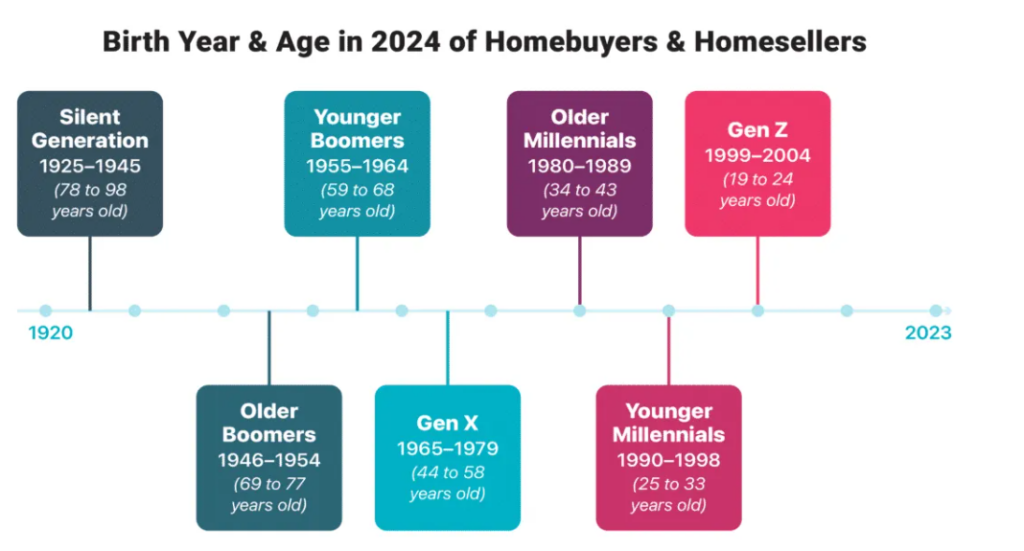
What category are you in? Scroll down and find where you are or could be!
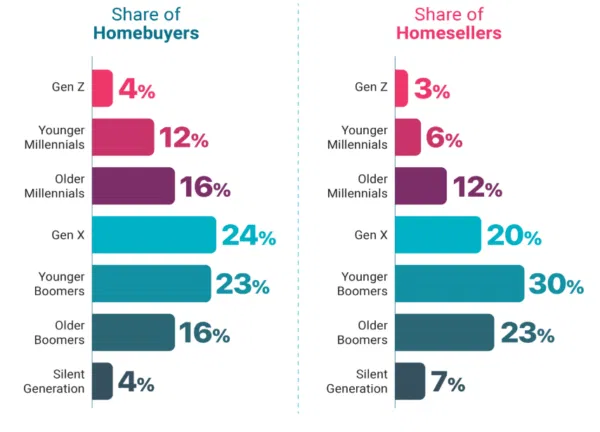
Impact of Gen Z on the Real Estate Market (1999-2004)
Now:
Many Gen Zers face financial difficulties, such as student loan debt, which can hinder their ability to buy a home. They know that housing costs are outpacing pay growth and homes are becoming more expensive. That is why those Gen Zers who can afford to buy are eager to do so.
Therefore, most Gen Zers prefer to purchase a home at a higher price than to pay steadily rising rent. Gen Z has begun to make inroads into the housing market in mid-sized cities.
In the future:
Larger homes, better schools, and a more family-oriented lifestyle may lead Gen Z to move to the suburbs as they grow older, earn higher wages, or start families.
Impact of Younger Millennials on the Real Estate Market (1990-1998)
Now:
Younger millennials are impacting the real estate market as they become first-time homebuyers and seek urban living near their workplaces. Some in this age group may delay homeownership or other housing options due to affordability issues driven by student loan debt and rising housing costs. The impact of low inventory, remote work, and their preferences for sustainability and well-being are shaping the features and locations of their homes.
In the future:
Younger millennials continue to impact the future real estate market significantly. Due to the high percentage of first-time homebuyers and the growing suburban living trend, demand in those areas will be driven by preferences for larger homes and better access to schools and transportation. Their focus on sustainability and technological integration will also influence the rise of eco-friendly communities and smart home features.
Furthermore, their reliance on friends and family for financial support underscores the role of social networks in their home-buying decisions. It emphasizes the relevance of referrals in the real estate market. In addition, due to higher home ownership costs, rent prices are increasing much faster than purchasing. This trend will lead to lower homeownership rates and higher rental market vacancies.
Impact of Elder Millennials on the Real Estate Market (1980-1989)
Now:
As elder millennials start buying residential real estate, technology plays a significant role in their home search. This generation uses mobile or tablet devices to look up properties, view them, and contact real estate agents. In addition, they are progressively purchasing larger first houses than earlier generations. They were among the groups buying homes during the COVID-19 pandemic, when house showings were conducted only online. Plus, older millennials typically favour living close to their jobs.
In the future:
Elderly millennials are anticipated to play a significant role in the future of the real estate market. As many homebuyers are married couples with a high median household income, their preferences for detached single-family and family-friendly homes, neighbourhood quality, and affordability will continue to drive demand in these sectors.
Additionally, their reliance on savings for down payments, preference for referrals and past real estate agents, and tendency to recommend their agents all underscore the value of personalized, trusted relationships in real estate transactions.
Impact of Gen X on the Real Estate Market (1965-1979)
Now:
Of all the generations, Gen Xers are in the best position to afford homes in the current housing market. They were well-established in their careers before the property market crash and subsequent recession in 2001. Gen X found housing relatively more affordable because they earned more or saved more than previous generations. As a result, Gen X is currently quietly dominating the housing market.
In the future:
Gen X will continue to have the highest percentage of homebuyers who prefer homes with extra rooms and spaces for multigenerational living, such as caring for adult children and aging parents.
Impact of Younger Boomers on the Real Estate Market (1955-1964)
Now:
Many younger boomers choose to downsize from their larger family homes to more compact living as they enter retirement. Some want a property that requires less maintenance and is easier to manage, while others like easy access to medical facilities and social activities within the community to accommodate their needs. In any case, the demand for smaller homes—predominantly single-family, condominium, and townhouse properties—is rising due to this trend.
In the future:
Younger boomers will continue to be active homebuyers and sellers, as homeownership reflects their accomplishments and plans.
Impact of Older Boomers on the Real Estate Market (1946-1954)
Now:
Older boomers feel the need to buy or sell, and an increasing number prefer to downsize for reasons such as health difficulties, the death of a spouse, financial concerns, or retirement. However, some older boomers opt to live with family members, resulting in multigenerational households.
Multigenerational family arrangements have become more prevalent as older adults move in with their adult children after selling their homes to receive the support they need and want. As a result of this trend, the need for larger homes to accommodate extended families is increasing.
In the future:
Older boomers will continue to significantly impact the housing market. This age group, which makes up a significant share of home sellers, has successfully leveraged market conditions to sell their properties for higher prices. We can expect them to continue buying and selling their properties, seeking to upgrade or downgrade their current living situation.
Impact of Silent Generation on the Real Estate Market (1925-1945)
Now:
The Silent Generation’s impact on the real estate market will persist, albeit not as buyers or sellers, but rather due to the homes their children inherit. If they prefer to buy, this age group moves closer to family and friends. Properties that make their lives easier while maintaining a high level of privacy are ideal as they age and may require extra attention.
In the future:
As the Silent Generation ages, they will gradually transition out of homeownership, leaving chances for younger people to enter the real estate market. However, since the Silent Generation comprises experienced, repeat home sellers, selling their homes later in life affects the availability of homes for sale and may drive up prices.

Comments:
Post Your Comment: