London Ontario Real Estate. No Fluff. No Sales Pitch. Just the Truth.

 Written by Ty Lacroix — Real Estate Strategist & Broker, London Ontario 

RSS

The Bottleneck in London, Ontario Real Estate: Are You Paralyzed by "Loss Aversion"?

London, Ontario's housing market isn't in free fall or in a frenzy — it's in a bottleneck, and that bottleneck is mostly psychological. Sellers anchored to 2022 peak prices are listing at numbers buyers won't validate. Buyers with the means to purchase are watching and waiting for the price to match the value. The result: high inventory, low movement. Behavioural economics calls this loss aversion — the proven tendency for the pain of a loss to feel twice as powerful as the pleasure of a gain. The sellers and buyers who understand this dynamic are the ones transacting. The ones who don't are waiting for a market that isn't coming back. Ty Lacroix, Broker at The Envelope Real Estate Group, has spent 24 years helping London clients read the psychology behind the numbers — and act accordingly.

If you've been watching the London, Ontario housing market lately, you've probably felt it.

There's a tension in the air. We aren't in a free-fall. We aren't in a frenzy. We're in a bottleneck — and it's not mainly about interest rates or supply chains. It's psychological.

The Behavioural Economics Behind the Stalemate

In behavioural economics, there's a concept called Prospect Theory. It tells us that the pain of a loss is psychologically about twice as powerful as the pleasure of an equivalent gain. That single quirk is doing more to freeze the London market right now than any interest rate announcement.

Here's how it plays out on both sides of the transaction.
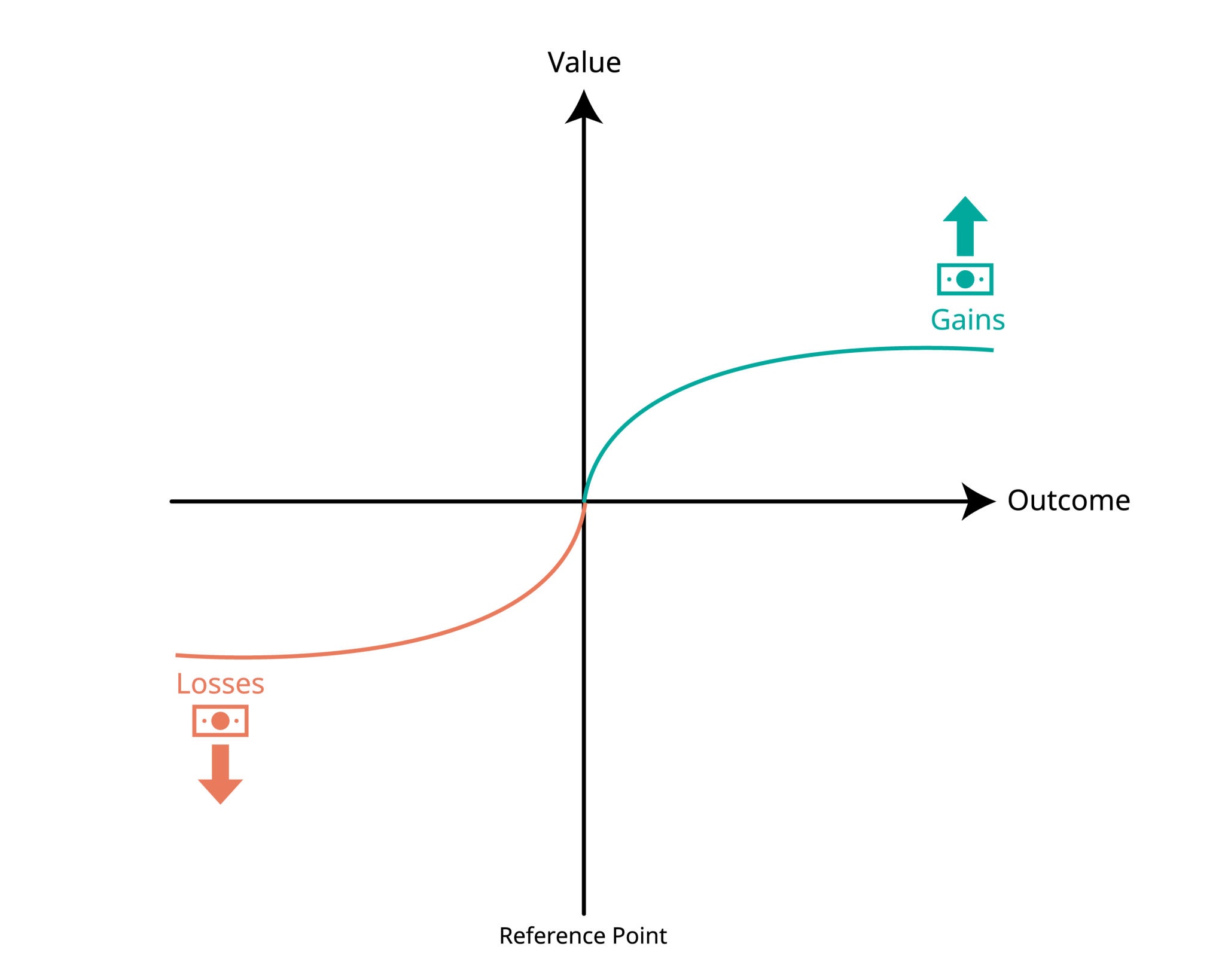
The seller's paralysis. Many sellers are sitting on five-plus months of competition but refuse to compete. They're anchored to the peak prices of 2022. Selling for today's market value feels like losing equity — even when that equity only ever existed on paper, in a moment that has since passed. So they list at yesterday's price and wait. The home sits. The days-on-market clock runs. The listing goes stale. And the seller's negotiating position erodes quietly while they hold out for a number the market stopped paying two years ago.

The upper-bracket buyer's discipline. If you're a buyer in the higher price ranges, you likely have the means and the intent to purchase. You can see the inventory — there's plenty of it. But you're disciplined. You aren't willing to validate a seller's nostalgia with your capital. You're waiting for the price to reflect the value, not the seller's memory of what the market once was. And with five months of inventory giving you choices, you can afford to wait.

High Inventory, Low Flow

The result is a specific kind of frustration: the houses exist, but the transactions don't.

Buyers are saying: "I see the house, but I'm not paying that."

Sellers are saying: "I have the house, but I'm not taking less."

Both positions feel rational to the person holding them. That's what makes this kind of market so stubborn — nobody feels like they're being unreasonable, and yet nothing moves.

How to Win in a Stalemate

The sales are happening. Just not where you'd expect to see it from public listing sites. The movement is concentrated in listings where the psychology has already shifted — where the seller has accepted today's market instead of waiting for yesterday's to return.

If you're a buyer, the opportunity is in identifying sellers who have moved past loss aversion and are ready to transact at current market value. Those are the listings where you have real negotiating room and where a well-structured offer lands. Chasing the stubborn listings wastes your time and your leverage.

If you're a seller: five months of inventory is your competition, not your comfort. Buyers have choices — more than they've had in years. To move your home in this market, you need to be the sharpest value in the pile, not another overpriced listing giving buyers a reason to keep looking. Pricing ahead of the market, not behind it, is the only way through the bottleneck.

The inventory is there. The question — for both sides — is whether the price reflects the reality of today's market or the memory of a different one.

I help my clients tell the difference. And I tell them the truth about which side of that line they're on, before it costs them.


Ready to stop watching and start moving? Reach out for a private conversation — I'll give you a straight read on where the real opportunity is right now. No pressure, no pitch.

Also find me at tylacroix.com and Totally Preachless

Read

The 2026 London Buyer’s Dilemma: Why More Choice Isn't Always Better

In early 2026, London, Ontario, recorded one of the slowest starts to a year in recent memory — and with five to six months of inventory now sitting on the market, the common narrative is that it's finally easy to buy a home. It isn't. For a buyer with genuine intent and the means to act, high inventory doesn't simplify the decision — it complicates it. A field of overpriced listings anchored to 2022 and 2023 expectations means the risk of overpaying is higher, not lower, than in a tight market. The buyers who win in this environment are the ones who can tell the difference between a sound purchase and an expensive mistake before they sign anything. Ty Lacroix, Broker at The Envelope Real Estate Group, has spent 24 years helping London buyers navigate exactly that distinction.

In early 2026, London, Ontario, recorded one of the slowest starts to a year in recent memory. With inventory sitting at a five-to-six-month supply, the common narrative is that buyers finally have the upper hand — that more choice means less risk and an easier path to the right home.

That narrative is misleading. And for a buyer with real intent and the means to act, believing it can be expensive.

The Illusion of Choice

When inventory is high, the search is easy. The decision is not.

In a market where homes have been sitting for weeks or months, you aren't browsing a curated selection of well-priced properties. You are navigating a field that includes genuinely good value, cosmetically disguised liabilities, and sellers still anchored to pricing expectations from two or three years ago — all mixed together with no obvious label telling you which is which.

The volume of choice doesn't protect you from overpaying. It just gives you more opportunities to do it. A buyer who applies 2023 thinking to a 2026 market — assuming that time on market means a deal, or that a price reduction signals motivation rather than a home that was simply overpriced to begin with — risks purchasing something that won't grow in value for years, if at all.

More listings are not the same as more opportunities. Discernment is what separates one from the other.

What a Tour Guide Costs You

The average approach to buying a home in this market goes something like this: a buyer is shown ten houses and asked which one they liked best. That isn't a strategy. It's a tour. And in a market full of overpriced inventory and sellers in denial about what year it is, a tour without analysis is how buyers end up in the wrong home at the wrong price.

The approach that actually protects your equity starts well before an offer is discussed. It means analyzing the underlying data for the specific street and neighbourhood — not just the city-wide average. It means understanding the home's capital expenditure position: the roof's remaining life, the HVAC's age, and the electrical and plumbing history. It means identifying whether the floor plan has long-term resale viability or functional obsolescence that will limit your buyer pool when it's time to sell. And it means knowing what comparable properties actually sold for — not what they were listed at — so your offer reflects reality, not the seller's memory of a different market.

That's the difference between a broker who shows you homes and one who protects your capital while doing it.

The Buyer Who Wins in a Slow Market

In a slow market, the educated buyer wins. Not the fastest buyer, not the most enthusiastic one — the most prepared one.

Preparation means understanding what you're actually buying underneath the staging. It means knowing when a listing has been sitting because it's overpriced versus when it's a genuine opportunity the market hasn't recognized yet. It means being ready to act decisively when the right home appears — because in any market, good value doesn't sit forever — without feeling pressure to act on something that isn't right just because the inventory is there.

The buyers who struggle in this environment are the ones who mistake abundance for safety. The ones who assume that because there are fifty homes to look at, the risk of making a wrong decision is lower. It isn't. The risk is the same. The distractions are just louder.

Before You Start Looking

If you're considering buying in London in 2026 — particularly in the $700K+ range where the stakes are real, and the margin for error is narrow — the work starts before the first showing, not after.

I've put together six buyer guides covering everything from evaluating a home's structural position to reading a neighbourhood's pricing trajectory. You don't need to sign anything to access them. They're there because an informed buyer makes better decisions, and better decisions protect equity on both sides of the transaction.

If you want to go further and get a straight read on a specific home or neighbourhood before you commit, that's the conversation to have.


Don't tour the market. Navigate it. Start with the complete buyer framework — or reach out directly for a private conversation about your specific situation. No pressure, no pitch.

Also find me at tylacroix.com and Totally Preachless

Read

Beyond the Yard Sign: Why "Standard" Real Estate is Costing London Homeowners Thousands

In London, Ontario's current market, the gap between listing a home and selling it well comes down to one thing: what happens after the sign goes up. The "post and pray" model — a yard sign, a few MLS photos, and a hope that the right buyer scrolls past — is a quiet tax on your equity. Research shows a buyer decides whether to keep looking at a listing or move on in approximately 1.5 seconds. What your home looks like in that window, and how many of the right buyers see it, determines what you walk away with. Ty Lacroix, Broker at The Envelope Real Estate Group, has spent 24 years building the kind of campaigns that find buyers — rather than waiting for buyers to find the listing.

In a shifting market, there is a wide gap between listing a home and selling it.

For years, too much of the London real estate market has run on what I call the post-and-pray model: a sign in the yard, a handful of photos on the MLS®, and a hope that the right buyer happens to be scrolling that day. In a seller's market with low inventory and frantic buyers, that approach got away with itself. In today's market — with five to six months of inventory and buyers who have time, options, and discipline — it costs you money quietly and consistently.

Your equity deserves more than a checklist.

The 1.5-Second Window

In today's market, your home has approximately 1.5 seconds to capture a buyer's attention before they scroll to the next listing. That's the entire window — and it happens on a phone screen, usually late at night, before a buyer has ever considered calling anyone.

What fills that window matters enormously. A dark, wide-angle photo taken on a Tuesday afternoon tells a buyer nothing worth stopping for. Architectural photography that shows light, proportion, and the feeling of the space — a short cinematic video that lets a buyer understand how the home flows before they ever book a showing — those stop the scroll. They also change the quality of the people who show up at your door. Buyers who've already experienced your home through professional visuals arrive warmer, more decided, and less likely to walk away over minor objections.

Drone photography adds what no ground-level image can: the lot, the street, the proximity to green space or amenities — the context that tells the story of where your home sits, not just what it looks like inside. For out-of-town buyers relocating to London from the GTA or beyond, that context is often what converts interest into a showing request.

This isn't about making your home look better than it is. It's about making sure buyers can actually see what it is — because in 1.5 seconds, what they can't see doesn't exist.

Finding the Right Buyer, Not Just Any Buyer

Most agents treat online marketing as a single event: list on MLS®, post once on Facebook, and wait. I treat it as an ongoing campaign with a specific target — the buyer who is most likely to value your home and pay accordingly.

That means your listing doesn't sit passively waiting to be discovered. It moves. Buyers actively searching London real estate online encounter your property across multiple platforms — not because of a blanket broadcast to everyone, but because the campaign is built around where serious, qualified buyers in your price range actually spend their time. If a buyer views your home once and moves on, they see it again. Staying consistently visible to the right person is what converts a "maybe" into a showing request.

Your curated network of high-intent buyers and London's top-producing brokerages also receives direct outreach — because some of the best buyers for your home are already working with someone who knows your neighbourhood and is actively looking on their behalf. Reaching that network directly, not just through a public portal, shortens the path between your home and the buyer who's right for it.

The MLS® Is the Starting Point, Not the Finish Line

The MLS® is where every listing begins. It's the baseline — the floor, not the ceiling. Syndicating your home across major Canadian and international portals extends that reach to GTA buyers priced out of the Toronto market and out-of-province buyers specifically targeting London's value relative to other Ontario cities. That buyer exists, and they aren't finding your home through a yard sign.

The combination — professional visuals, targeted digital presence, direct brokerage outreach, and broad portal syndication — is what a campaign looks like, as opposed to a listing. One waits. The other works.

What This Means for Your Equity

The difference between a home that sells at or above market value and one that sits, drops its price, and closes below where it started isn't usually the home. It's the strategy behind the sale.

After 24 years in this market, I can tell you that the sellers who walk away with the strongest results are almost never the ones with the newest kitchen or the biggest lot. They're the ones whose home was seen by the right people, presented at its best, and marketed with enough reach and consistency that the right buyer couldn't miss it.

If you're considering selling in London and you want to understand what a campaign built around your specific home and neighbourhood actually looks like, that's the conversation to have before the sign goes up.


Your home deserves more than a yard sign. Reach out for a private conversation about what a real marketing strategy looks like for your specific property — no pressure, no pitch.

For the complete selling framework: Selling Your Home in London, Ontario →

Also find me at tylacroix.com and Totally Preachless

Read

Selling Your Condo When the Market Slows Down: My Strategy for 2026

As we move through 2026, London's condo market — townhouses, townhomes, and apartment-style condos alike — is firmly in buyers’ territory, with roughly two to three months of inventory giving buyers time, choice, and negotiating room they haven't had in years. In that environment, a passive listing strategy doesn't just underperform — it costs you money. Precise pricing, a proactive status certificate review, and a focused launch are what separate a condo that sells from one that sits. Ty Lacroix, Broker at The Envelope Real Estate Group, has guided hundreds of condo transitions in London over 24 years — and knows what it takes to stand out when the market is crowded.

As we move through 2026, the London real estate market has reached a definitive turning point — and if you own a condo, you've probably felt it.

After 24 years and hundreds of condo transitions, I've seen every cycle this market has to offer. Right now, we are firmly in buyer's territory, with roughly two to three months of inventory giving buyers more choice than they've had in years. They are taking their time, comparing carefully, and negotiating with discipline.

For a condo seller, that shift can feel heavy. The questions aren't just technical — they're personal. Will my townhouse or apartment actually sell? How much will I really walk away with? Is there a way to move forward without getting lost in the noise?

Those are the right questions. Here's the honest answer to each of them.

The Reality of This Market

In a market this well-supplied, your condo cannot afford to be just another listing. Buyers have options, and they know it. Days on market are lengthening across London — which means a home that doesn't stand out in week one quietly becomes a home that buyers assume has a problem by week five.

The "list and hope" approach doesn't just fail in this environment. It costs you money — in carrying costs, in price reductions, and in the negotiating leverage you lose the longer a listing sits.

What works instead is preparation, precision, and a focused launch. Here's what that looks like in practice.

Pricing That Reflects Today, Not Last Year

The first and most important decision is price — and in this market, it has to be right on day one, not arrived at through a series of reductions.

That means looking at what's actively competing with your condo right now, what's recently sold, and — critically — what's recently failed to sell and why. Failed listings tell you where the market's ceiling actually is, which is information a comparable sales report alone won't give you. The goal isn't to be the cheapest option in the building; it's to be the most compelling value a qualified buyer sees when they're ready to act.

I don't make promises about over-asking prices that the current data won't support. What I do commit to is an honest, precise number that positions your home to move — and protects as much of your equity as today's market allows.

The Status Certificate Review: Most Sellers Skip

Here's where condo sales in a slow market most often go sideways: the lawyer review.

A buyer's lawyer reviews the status certificate, the condo corporation's financials, the reserve fund study, and the meeting minutes. If something in those documents raises a flag — a pending special assessment, a reserve fund that's running low, an unresolved maintenance issue — the buyer walks. In a market where buyers already have reasons to be cautious, a preventable deal-breaker at the lawyer stage is an expensive surprise.

My approach is to review your status certificate and corporate financials before your home ever hits the market. Finding a potential issue early means you can address it, disclose it properly, or price it on your terms — rather than scrambling to explain it after a deal has already begun to unravel.

A Launch, Not a Listing

In a crowded market, the first two weeks are everything. A condo that arrives looking sharp, priced correctly, and promoted to the right buyers — including London's top-producing buyer agents who are actively working with qualified clients — arrives with momentum. Momentum generates showings. Showings generate offers. A passive listing waits for all of that to happen by accident.

The difference between a condo that sells in 2026 and one that sits isn't usually the unit. It's what happened — or didn't happen — in the first fourteen days.

What This Means for Your Move

For most condo sellers, this isn't just a transaction. It's a home transition — a move that probably connects to the next chapter of your life, whether that's downsizing, relocating, or freeing up equity for what’s next. The financial outcome of this sale matters.

My job is to be the calm, straight-talking voice in the room — to give you the facts about where the market actually is, what your condo is realistically worth, and what it will take to sell it well. Then to do that work, without drama and without shortcuts.

If you're thinking about selling your condo in London this year and you want an honest read on your specific situation before you commit to anything, that's exactly the conversation to start with.


Don't get lost in the noise. See how a disciplined condo selling strategy protects your equity → Or reach out directly for a private conversation about your specific unit. No pressure, no pitch.

Also find me at tylacroix.com and Totally Preachless

Read

The 2026 Riverbend London Real Estate Report: Why Data-Driven Buyers & Sellers Are Winning

This is a historical snapshot — the Riverbend, London, Ontario real estate market in 2025. Markets move month to month. For current stats and my honest read on where each part of the city is actually heading, see my London neighbourhood market updates — ten neighbourhoods, refreshed monthly. Or for what your specific home is worth in today's market, reach out for a personal analysis. No pressure, no pitch.

What makes Riverbend sought-after in 2026? Riverbend has evolved into a high-functioning ecosystem. It is no longer just a suburb; it is a destination where professionals live within minutes of their clinics and offices. The strategic combination of West 5 commercial convenience and the privacy of the RiverBend Golf Community makes this pocket resilient against broader market fluctuations.

The "Riverbend Advantage": Data You Can't Get Elsewhere

When you browse Riverbend homes on our site, you get access to the "insider track" that no other London Realtor provides. We believe in total transparency, which is why we offer:

  • Full Property Details & Photos: Beyond the basic MLS® summary.

  • Hyper-Local Context: Integrated maps showing exact proximity to Kains Woods and West 5 services.

  • Real-Time Market Stats: View the average list vs. sold prices and current days on market specifically for Riverbend—not just general London averages.

  • Lifestyle Intelligence: Walk scores, transit data, and detailed school catchment boundaries.

2026 Market Conditions: By the Numbers. The current market in Riverbend remains a Buyer’s Market, with a sales-to-new-listings ratio of 72% as of late 2025.

  • Detached Homes: Averaging approximately $765,000, though custom builds in private enclaves often exceed $1.8M.

  • Condos & Townhomes: Benchmark prices range from $524k to $635k, offering a strategic entry point for those prioritizing the West 5 lifestyle.

  • Sold Data: In recent months, Riverbend homes have sold for an average of 96.4% of the asking price, with a median time on market of 43 days.

SEE ALL THE HOMES FOR SALE IN RIVERBEND, LONDON NOW.

Also find me at tylacroix.com and Totally Preachless

Read

Oakridge, London, Ontario, Real Estate Homes and Condos

This is a historical snapshot — the Oakridge, London, Ontario market in 2025. Markets move month to month. For current stats and my honest read on where each part of the city is actually heading, see my London neighbourhood market updates — ten neighbourhoods, refreshed monthly. Or for what your specific home is worth in today's market, reach out for a personal analysis. No pressure, no pitch.

Oakridge is a tapestry of micro-markets. Understanding the nuances between Oakridge Acres (ideal for traditionalists) and Oakridge Meadows (perfect for new-build seekers) is essential for a successful transaction. Whether you are eyeing the park-side serenity of Hazelden Park or the river-access of Riverside Gardens, each street offers a different value proposition in 2026.

What makes Oakridge so sought-after in 2026?

The enduring appeal of Oakridge lies in its recreational infrastructure. Having the Thames Valley Golf Course and its 18-hole and 9-hole Hickory courses within walking distance adds a layer of lifestyle luxury that few other London neighbourhoods can match. This, combined with the "walkable" feel of the Hazelden North area, keeps demand high even when inventory fluctuates.

What are the current Oakridge market conditions?

In the current 2026 landscape, we are navigating a Buyer’s Market with roughly 5 months of inventory. This is a significant shift for Oakridge, which historically sees very low turnover.

  • For Sellers (60% Focus): Standing out in Oakridge Gardens or Oakridge Park requires more than a lawn sign. We utilize "Entity-Based SEO" to ensure your home appears when buyers search for specific sub-neighbourhoods.

  • For Buyers (40% Focus): You currently have the most choice in a decade. It is prime time to secure a "forever home" in Riverside Gardens, with terms that protect your investment.

The Oakridge "Pros" List:

  • Proximity to Nature: The Thames Valley Parkway and Sifton Bog.

  • Premier Golfing: Minutes from the historic Thames Valley Golf Course.

  • Diverse Housing: From the mid-century gems in Oakridge Acres to modern executive homes in Hazelden North.

  • Elite Education: Home to some of the city's highest-ranking elementary and secondary schools.

Would you like to view all the houses, townhouses, townhomes, and apartment condos for sale in the Oakridge neighbourhood of London, Ontario?

Not only will you be able to see what is listed for sale, but you can also see:

  • Full details of each property

  • Photos

  • Maps

  • Schools

  • Parks and Recreation

  • Transit

  • The neighbourhood statistics

  • The days on the market

  • The average list prices and sold prices

SEE ALL THE HOMES FOR SALE IN OAKRIDGE, LONDON NOW.

Also find me at tylacroix.com and Totally Preachless

Read

Old South London & Wortley Village Real Estate: A Market Guide

This is a historical snapshot — the Old South, Wortley Village, London, Ontario real estate market in 2025. Markets move month to month. For current stats and my honest read on where each part of the city is actually heading, see my London neighbourhood market updates — ten neighbourhoods, refreshed monthly. Or for what your specific home is worth in today's market, reach out for a personal analysis. No pressure, no pitch.

Wortley Village is the historic core of Old South London, but the community’s reach extends far beyond the village shops. Old South offers a diverse range of properties, from original yellow-brick cottages near the village centre to high-end estates on expansive lots. For those selling in 2026, understanding this nuance is the key to a successful transaction.

Is now the right time to sell in Old South?

With approximately 5 months of inventory currently on the market, Old South has shifted into a Buyer’s Market. For homeowners, this means your property is competing with more listings than we have seen in recent years. Success in this environment requires an elite digital strategy and precise pricing to ensure your home stands out to the most qualified buyers.

Despite the increase in supply, Old South remains one of London’s most resilient markets. The combination of architectural heritage, mature tree canopies, and a strong sense of community continues to attract serious interest. We focus on highlighting the "lifestyle ROI" of your home—emphasizing its history and its proximity to the village—to justify your valuation even in a crowded market.

What makes Old South a top choice for buyers in 2026?

For buyers, the current market provides a rare opportunity to be selective. You can explore a wide variety of housing styles, from mid-century modern designs to meticulously maintained heritage homes. The increased inventory means you have the time to find a property that truly aligns with your long-term goals without the pressure of immediate bidding wars.

2026 Old South Market Snapshot

  • Market Status: Buyer’s Market

  • Inventory Levels: 5.2 Months of Supply

  • Average Listing Duration: 38 to 45 Days

  • Sales-to-List Price: Approximately 96.5%

  • Property Variety: High (Detached, Townhomes, Heritage Condos)

Discover Old South London and Wortley Village

Uncover the charm of this sought-after neighbourhood and find the perfect place to call home. Whether you are looking to sell at the best possible price or buy into this historic community, our platform is your primary resource.

You can instantly view all houses, townhouses, townhomes, and apartment condos for sale, updated six times daily!

Plus Get:

  • Full details of each property and its unique history.

  • High-resolution photos and interactive area maps.

  • Direct information on schools and local parks.

  • Detailed info on transit and recreation, including Thames Park.

  • The latest neighbourhood statistics and inventory data.

  • Current days on the market and average list-to-sold price ratios.

[SEE ALL THE HOMES FOR SALE IN OLD SOUTH LONDON / WORTLEY VILLAGE NOW]

Also find me at tylacroix.com and Totally Preachless

Read

Byron London Ontario Real Estate: Luxury Homes & Comfortable Safe Living

This is a historical snapshot — the Byron, London, Ontario real estate market in 2025. Markets move month to month. For current stats and my honest read on where each part of the city is actually heading, see my London neighbourhood market updates — ten neighbourhoods, refreshed monthly. Or for what your specific home is worth in today's market, reach out for a personal analysis. No pressure, no pitch.

What makes Byron a stable choice for 2026? As we move into 2026, Byron has emerged as a "Blue Chip" neighbourhood, offering a rare sense of market stability. While other regions may experience volatility, Byron's limited geographic boundaries—nestled between the Thames River and Boler Mountain—ensure that supply remains naturally constrained. This inherent scarcity makes it a safe haven for homeowners' equity while maintaining its status as a high-demand destination for those relocating to London.

How do 2026 market conditions create a "Fair Play" environment? The current market is defined by ~5 months of inventory, officially placing us in a Buyer's Market for the first time in years.

However, this isn't a "crash"; it is a stabilization. For buyers, this means the ability to include home inspections and financing conditions without the pressure of a bidding war.

For sellers, it means that while your home may stay on the market longer (averaging 35–45 days), the buyers coming through your door are highly qualified, serious, and ready to pay a fair price for the premium Byron lifestyle.

What should buyers and sellers expect this year? The 2026 "Byron Opportunity" looks different depending on your goals:

  • For Buyers: You finally have the leverage to be picky. You can prioritize specific school catchments or wait for a home with that exact "Old Byron" backyard you've always wanted.

  • For Sellers: Presentation is now the primary driver of value. In a market with more choice, homes that are marketed correctly and priced with 2026 data—not 2022 expectations—are the ones that stand out and sell.

  • For Everyone: The "Byron Premium" remains intact. Whether buying or selling, you are participating in a micro-market that values community, nature, and long-term livability over short-term speculation.

SEE ALL THE HOMES FOR SALE IN BYRON, LONDON NOW!

Also find me at tylacroix.com and Totally Preachless

Read

Why Waiting Until Spring Could Cost You Thousands

In London, Ontario, waiting for the spring market is one of the most common — and most expensive — instincts a buyer or seller can follow. More listings in spring mean more competition for sellers and higher prices for buyers, not better outcomes for either. The quieter months before the spring surge consistently offer sellers fewer competing listings and buyers more negotiating room — advantages that evaporate the moment the spring inventory flood arrives. Ty Lacroix, Broker at The Envelope Real Estate Group, has spent 24 years watching London sellers and buyers lose money to a calendar they didn't need to follow.

In the London, Ontario real estate market, there is a long-standing tradition: wait for the spring.

Many buyers and sellers believe the spring market is the gold standard — that more listings and more buyers automatically lead to a better result. The logic feels intuitive. In practice, for most people, it works against them.

Here's what the data actually shows about timing your move in London.

For Sellers: The Hidden Cost of the Spring Flood

In a market where supply already outweighs demand, waiting for spring doesn't improve your position — it dilutes it.

Every year, London sees a surge of new listings as the weather warms. Sellers who waited through the winter all arrive at roughly the same time, which means the buyers who were there all along now have significantly more to choose from. Your home stops being one of a handful of options and becomes one of dozens. That shift in the supply picture hands negotiating leverage directly to buyers — and costs sellers money.

The competition factor. Before the spring surge, there are fewer homes for buyers to choose from. Listing earlier positions your home as a primary option rather than another entry in a crowded field. Buyers who are actively looking in the quieter months are comparing a smaller set of properties, which means yours gets more attention and more serious consideration.

The motivation factor. Buyers active before the spring rush are typically there for a reason — a relocation, a family change, an expiring financing approval. They are ready to make decisions. Spring brings a different mix, including buyers browsing without urgency and sellers hoping for a bidding war that may not materialize. Serious motivation on both sides of the table makes for cleaner, faster transactions.

For Buyers: The Cost of Waiting Isn't Just the Price

For buyers, the expense of waiting for spring isn't only about what a home costs — it's about what the conditions cost you.

Rate environment. Mortgage rates move, and the direction they move matters to your monthly carrying cost for the life of the loan. When rates are stable or declining, acting before a potential shift locks in a more predictable payment. Waiting for spring in a stable-rate environment means competing with a larger pool of buyers who've made the same calculation at the same time — which pushes prices, not rates, in the wrong direction.

Negotiating room. In the quieter months, sellers who are genuinely motivated have fewer competing offers to lean on. That gives a prepared buyer real room to negotiate — on price, on conditions, on closing timeline. In the spring, sellers often expect multiple offers, whether or not the market delivers them, which makes the negotiation process more difficult, regardless of the actual offer volume.

The spring premium. London has shown a consistent seasonal pattern over many years: average sale prices tend to rise as the market moves from the quieter months into the peak of May and June. Even in years where the overall market felt slow, the cost of waiting for warmer weather was measurable. A home that could have been purchased in February on reasonable terms often costs more — sometimes significantly more — by the time the spring market is fully underway.

The Bottom Line

The spring market isn't bad. It's just crowded — for sellers competing with new inventory and for buyers competing with each other. The buyers and sellers who consistently come out ahead are the ones who make their move based on their specific goals and the actual market conditions, not on a calendar date that everyone else is also waiting for.

The quieter months before the spring surge offer a level of control — over competition, over negotiation, over timing — that the spring frenzy consistently erodes. Sometimes the best time to act is when everyone else is still waiting for the snow to melt.

If you're weighing the timing of your move in London and want a straight read on what the current market actually offers for your specific situation, that's the conversation worth having before the spring crowd arrives.


Don't let the calendar make your decision for you. Reach out for a private conversation about your specific timing and the current market. No pressure, no pitch.

Thinking about selling? London Ontario Home Selling Strategy →
Thinking about buying? London Ontario Home Buying Strategy →

Also find me at tylacroix.com and Totally Preachless

Read

Before You Make a Move in 2026

The London, Ontario real estate market in 2026 is not a repeat of the last few years — and it's not as simple as the headlines make it sound. Buyers are selective, pricing accuracy matters more than ever, and well-prepared homes still move while poorly positioned ones quietly lose leverage. The gap between what people assume about the market and what's actually happening is where costly mistakes get made. Ty Lacroix, Broker at The Envelope Real Estate Group, has spent 24 years helping London buyers and sellers replace assumptions with a clear picture of their actual position — before it costs them.

What I'm seeing consistently is that many people are making decisions based on outdated assumptions rather than current conditions. Whether you're thinking about selling, buying, relocating, or just researching your options, the gap between perception and reality has widened. And that gap is where costly mistakes tend to happen.

This isn't about predicting the market. It's about understanding how it's actually behaving right now — and what that means before you make a move.

What's Changed — and What Hasn't

The market hasn't stopped. It has shifted.

Buyers are more selective, not absent. Pricing accuracy matters more than optimism. Well-prepared properties still move. Poorly positioned ones sit and quietly lose leverage.

The most significant change isn't price alone — it's the alignment of expectations. When expectations match reality, transactions happen. When they don't, frustration follows — on both sides of the table.

If You Own a Home: This Is About Risk, Not Pressure

For homeowners, the most significant risk right now isn't timing — it's mispricing and misreading buyer behaviour.

A few things worth understanding before you decide anything:

Overpricing no longer "tests the market" — it removes momentum. First impressions matter more when buyers are cautious and have choices. Preparation and positioning often matter more than the list date itself.

This doesn't mean everyone should sell. It means decisions should be based on current conditions, not last year's results — or the year before that. Clarity reduces risk. Assumptions increase it.

If You're Planning to Buy: Strategy Matters More Than Speed

For buyers — especially those in the mid- to upper price ranges or relocating to London — the market still offers real opportunity, but it rewards preparation over urgency.

Competition still exists for quality, well-priced homes. Price discipline matters more than speed. Buyers who understand their position move with confidence; buyers relying on outdated narratives hesitate or overreact. The strongest buyers right now aren't the fastest — they're the most informed.

Why Clarity Beats Pressure Every Time

The goal right now isn't to push decisions. It's to replace assumptions with a clear picture of where you actually stand.

There's no instant valuation here, no sales pressure, no obligation. Just a straight conversation about what current conditions mean for your specific situation — whether you're considering a sale in the next few months, planning a purchase, or simply gathering information before committing to anything.

If you're planning a move in the next 3 to 12 months, or even just exploring your options, a clearer picture now can save time, stress, and costly missteps later. Whether you move forward or not, you'll walk away with better information — and better information leads to better decisions.

Ready for a straight look at your situation? Reach out for a private conversation — no pressure, no obligation, no pitch.

Thinking about selling? London Ontario Home Selling Strategy →

Thinking about buying? London Ontario Home Buying Strategy →

Also find me at tylacroix.com and Totally Preachless

Read

A Definite Buyer’s Market London Ontario!

This is a historical snapshot — London, Ontario for September 2025. Markets move month to month. For current stats and my honest read on where each part of the city is actually heading, see my London neighbourhood market updates — ten neighbourhoods, refreshed monthly. Or for what your specific home is worth in today's market, reach out for a personal analysis. No pressure, no pitch.

This is an opportune time to turn a London, Ontario, buyer’s market to an advantage for both buyers and sellers!

Inventory Levels (homes for sale) in London, Ontario, for September reached their highest point in years, indicating a shift to a buyer’s market.

This article covers the historical real estate market conditions in London, Ontario, for September 2025. For current market insights, updated stats, or expert guidance, contact me for a personalized analysis.

property values London Ontario

In September, 1,701 new listings were recorded via the MLS® System of the London and St. Thomas Association of REALTORS® (LSTAR), up 13.7% compared to the same month a year ago. With listings outpacing sales, the sales-to-new listings ratio also eased to 31.4%, compared to 45.7% in August.

A sales-to-new-listings ratio below 45% characterizes a buyer’s market. September 2025 saw six months of inventory, which is up from August, which recorded five months of inventory.

Good For Serious Buyers

A buyer’s market in London, Ontario, means there are more listings, fewer competing offers, and sometimes a motivated seller means choice, leverage, and better pricing. Conditions return—financing, inspection, and, in some cases, the sale of your current home—so you can move with confidence. Without frantic bidding wars, you can tour carefully, compare neighbourhoods, and choose the home that truly fits—the Smartest Moves For Buyers.

Great For Wise Sellers

A buyer’s market in London, Ontario, doesn’t hand buyers the keys—it rewards disciplined sellers. The truth is, smart pricing, standout presentation, and tight terms shift leverage back to you. Fewer bidding wars, if any? Fine. Low-ball offers will happen; not to worry, nine out of ten times, lowball offers come from buyers who are not familiar with the market. You can list and sell with clarity, speed, and negotiation. The best part? You control the process—and protect your net. How to handle low-ball offers.

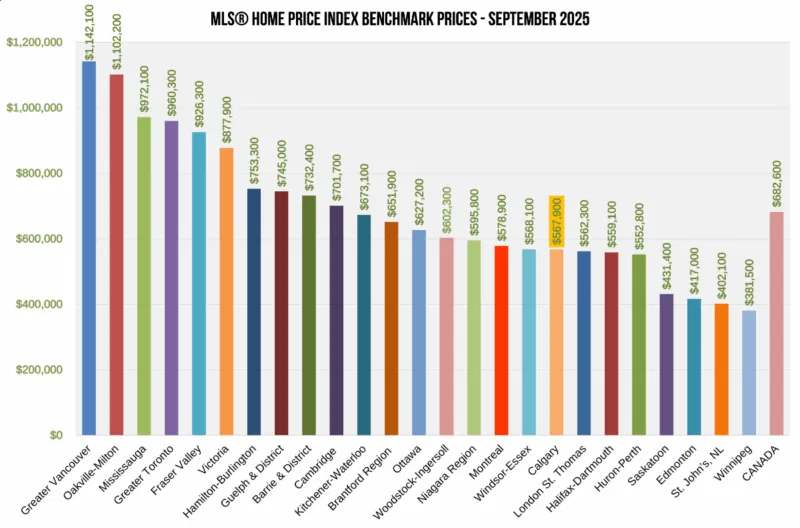
The table below shows the average prices for September 2025 and the MLS® HPI benchmark prices across LSTAR’s main regions.

AreaSeptember 2025 MLS® HPI Benchmark PriceSeptember 2025 Average Price
Central Elgin$609,300$723,723
London East$433,400$503,296
London North$642,200$685,943
London South$561,100$634,874
Middlesex Centre$782,300$937,538
St. Thomas$527,400$558,707
Strathroy-Caradoc$777,000$600,984
LSTAR$562,300$622,805

The HPI benchmark price reflects the value of a “typical home” in a particular area, as determined by buyers based on various housing attributes. In contrast, the average sales price is calculated by summing the sale prices of all homes sold and dividing that total by the number of homes sold. The HPI benchmark price helps gauge trends over time, as averages may fluctuate due to changes in the mix of sales activity from one month to the next.

Home Prices Across Canada

The following table displays September’s benchmark prices for all housing types within LSTAR’s jurisdiction, showing how they compare with those recorded in the previous month and three months ago.

MLS® Home Price Index Benchmark Prices
Benchmark TypeSeptember 2025Change Over August 2025Change Over June 2025
LSTAR Composite$562,300↓1.8%↓3.2%
LSTAR Single-Family$611,400↓2.2%↓3.7%
LSTAR One Storey$548,900↓3.3%↓5.1%
LSTAR Two Storey$662,600↓1.3%↓2.7%
LSTAR Townhouse$467,3000.0%↓2.1%
LSTAR Apartment$357,000↓2.3%↓2.0%

The chart below displays the most recent HPI benchmark prices nationwide, courtesy of CREA. 

MLS chart of house prices across Canada September 2025

Also find me at tylacroix.com and Totally Preachless

Read

Real Estate Pessimism London Ontario

There's a lot of pessimism about London, Ontario's real estate market right now — fed largely by headlines designed to grab attention, not inform decisions. Yes, there's more inventory than a couple of years ago, and some buyers are sitting out. Both are true. But the same data can be framed as a crisis or accurately — and the accurate version still shows homes selling at strong prices every single month. Ty Lacroix, Broker at The Envelope Real Estate Group, has spent 24 years watching headlines come and go while patient, prepared buyers and sellers keep transacting regardless.

There's a lot of pessimism right now about the London, Ontario real estate market being a buyer's market. Some of that pessimism is fed by talking heads on TV and radio, and some by people who simply enjoy being the bearer of bad news.

There's no disputing the underlying facts: there are more homes for sale now than there were a couple of years ago, and some buyers are hesitant or unable to act. Both of those things are true.

But people gravitate toward pessimism — especially when it comes to real estate. The same data, framed two different ways, produces two very different reactions.

The Same Facts, Two Headlines

Which headline gets more attention: a plane crash, or the fact that tens of thousands of flights landed safely yesterday? Both are true on any given day. One gets the coverage.

It's the same with real estate. "It's a buyer's market" sounds alarming. "Homes in London are selling at 97.4% of asking price" is the same underlying reality, told accurately instead of dramatically.

Or consider unemployment. A 5% unemployment rate sounds concerning in isolation. The same number means that 95% of people in the workforce have jobs. Both are accurate. Only one is designed to alarm you.

What's Actually Happening

Some buyers who would genuinely benefit from buying right now aren't acting — not because the opportunity isn't there, but because they're missing one piece of what they need to move forward: the financial readiness, a clear need driving the decision, or simply the confidence to act in a market that the headlines have told them to fear.

For buyers who do have what they need — readiness, a real reason to move, and the financial capacity to act — this is a genuinely strong opportunity. For sellers who are equally prepared — priced correctly, presented well, and ready to engage with serious buyers — this remains a good time to sell.

Action Gets Results

I'm a firm believer that action produces outcomes. The commentators, the economists, and the news anchors aren't the ones buying or selling homes. They're reporting on a market they don't have a personal stake in transacting within.

Homes and condos in London continue to sell. It may take longer than it did during the frenzied years, but a patient, prepared homeowner — and a patient, prepared buyer — consistently come out ahead of anyone waiting for the headlines to feel better before they act.

If you're trying to decide whether now is the right time for your specific situation, that decision should be based on your readiness and your goals — not on which headline got the most clicks this week.


Ready to look past the headlines and talk about your actual situation? Reach out for a private conversation — no pressure, no pitch.

Also find me at tylacroix.com and Totally Preachless

Read
This website may only be used by consumers that have a bona fide interest in the purchase, sale, or lease of real estate of the type being offered via the website. The data relating to real estate on this website comes in part from the MLS® Reciprocity program of the PropTx MLS®. The data is deemed reliable but is not guaranteed to be accurate.